
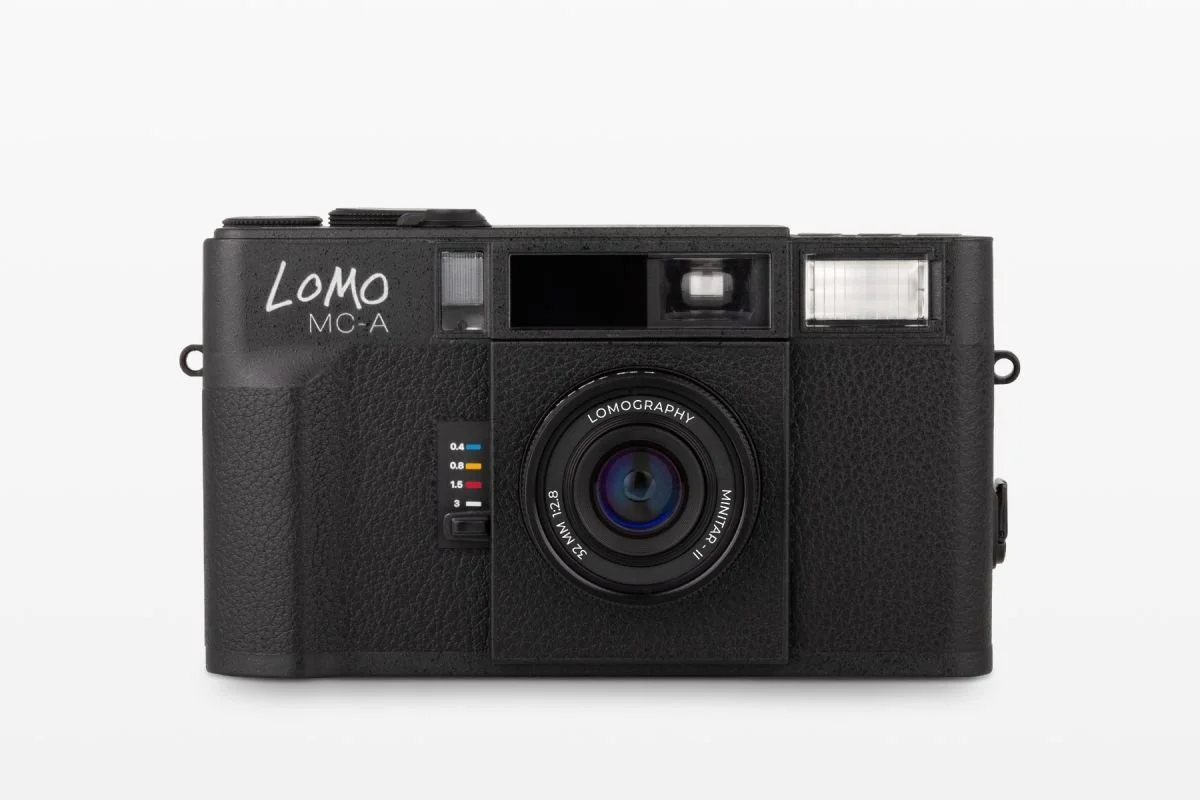
Lomography’s Lomo MC-A: A Modern Classic for the Analog Generation
Lomography is bringing a new 35mm camera to the film game. Check out the features and find out it you need to order one!
If you’ve been itching for something new in the 35mm world, Lomography just dropped a treat for all of us film junkies. The Lomo MC-A — short for “Metal Compact-Automatic” — isn’t just another toy camera or nostalgic throwback. It’s a full-metal, USB-C-rechargeable, manual-capable, film-shooting machine that’s ready to go head-to-head with the beloved point-and-shoots of the 1980s and ‘90s.
In an age where vintage cameras are skyrocketing in price and half of eBay seems to be “for parts only,” Lomography has finally given us what we’ve all been waiting for: a brand-new, compact film camera that doesn’t feel like a plastic souvenir.
Let’s dive into what makes this little silver (or black) beauty such a big deal.
The Camera We’ve Been Waiting For
Lomography has always had a knack for keeping analog alive. From the LC-A+ to the Simple Use cameras, they’ve made film photography fun, accessible, and a little unpredictable. But the Lomo MC-A is a different beast altogether. It’s not a novelty camera — it’s a serious compact for people who love film but don’t want to baby their thirty-year-old Olympus Stylus or pay a small fortune for a Contax T2.
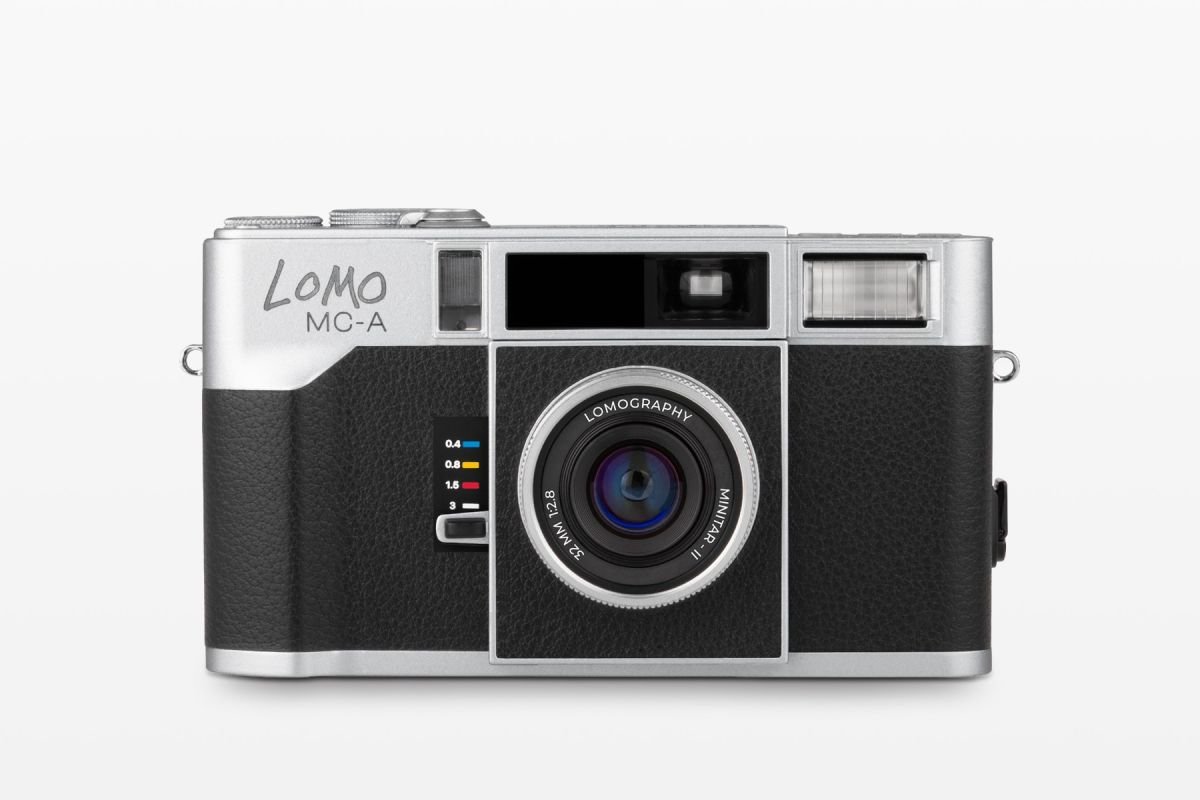
Right out of the box, the MC-A makes a statement. It’s solid metal, giving it a reassuring heft that most modern film cameras lack. Gone is the creaky plastic. Instead, it feels like something your grandfather would’ve trusted on vacation — if your grandfather had access to USB-C.
Let’s Talk Features (Because There Are Plenty)
Here’s the rundown of what you’re getting when you pick up the MC-A:
32mm f/2.8 multi-coated glass lens — not plastic, not a pinhole, but the real deal.
Full metal body — available in black or silver.
Automatic exposure and aperture priority modes.
Full manual mode for the control freaks among us.
Zone focusing from 0.8 m to infinity.
Built-in flash with auto, fill, and off options (plus first-curtain sync).
Multiple exposure mode (because one frame is never enough).
Built-in light meter.
USB-C rechargeable battery (no more hunting for weird button cells).
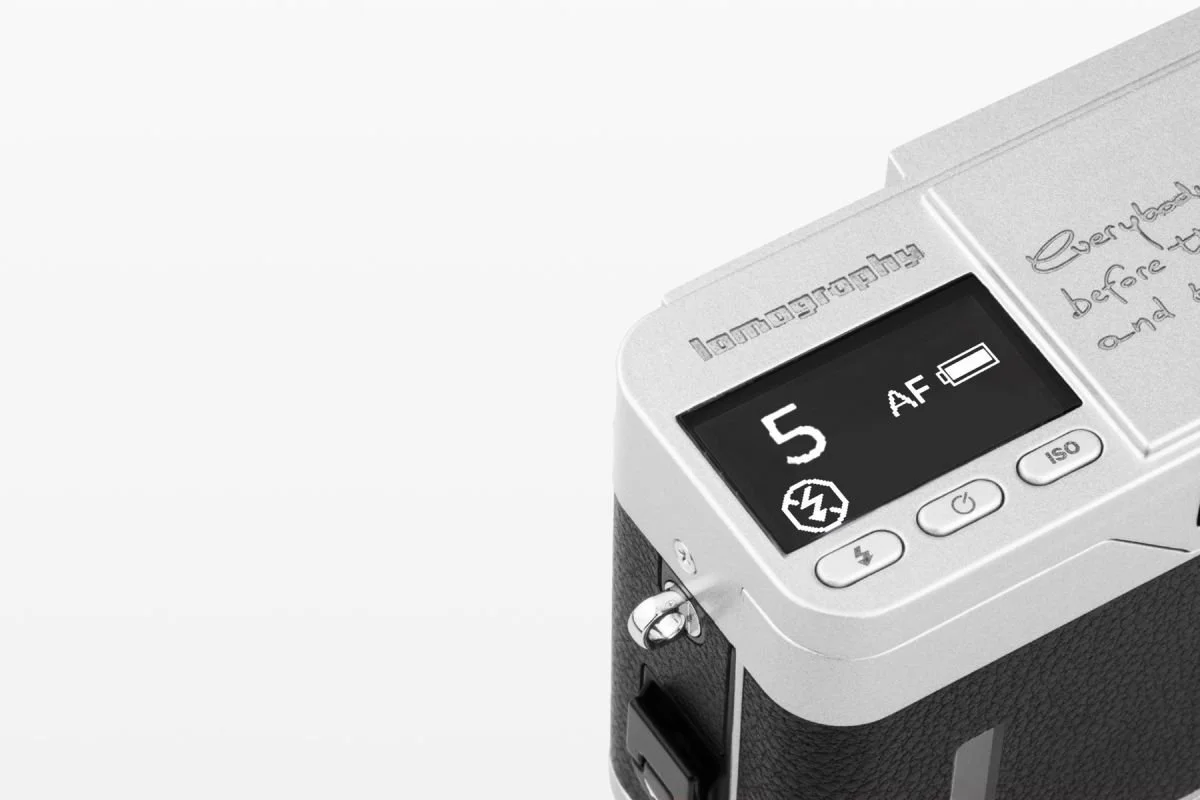
LCD screen for mode display and shot count.
It’s essentially a mash-up of everything we loved about compact film cameras — but with modern sensibilities and fresh parts.
That Lens: The Heart of the MC-A
One of the biggest questions film shooters always ask is, “Yeah, but how’s the lens?”
The MC-A’s 32 mm f/2.8 glass lens is what Lomography calls a multi-coated optical lens, designed for clarity and vibrant color rendition. Early test shots from reviewers show it has that classic Lomography charm — contrasty, a touch of vignetting, and full of character.
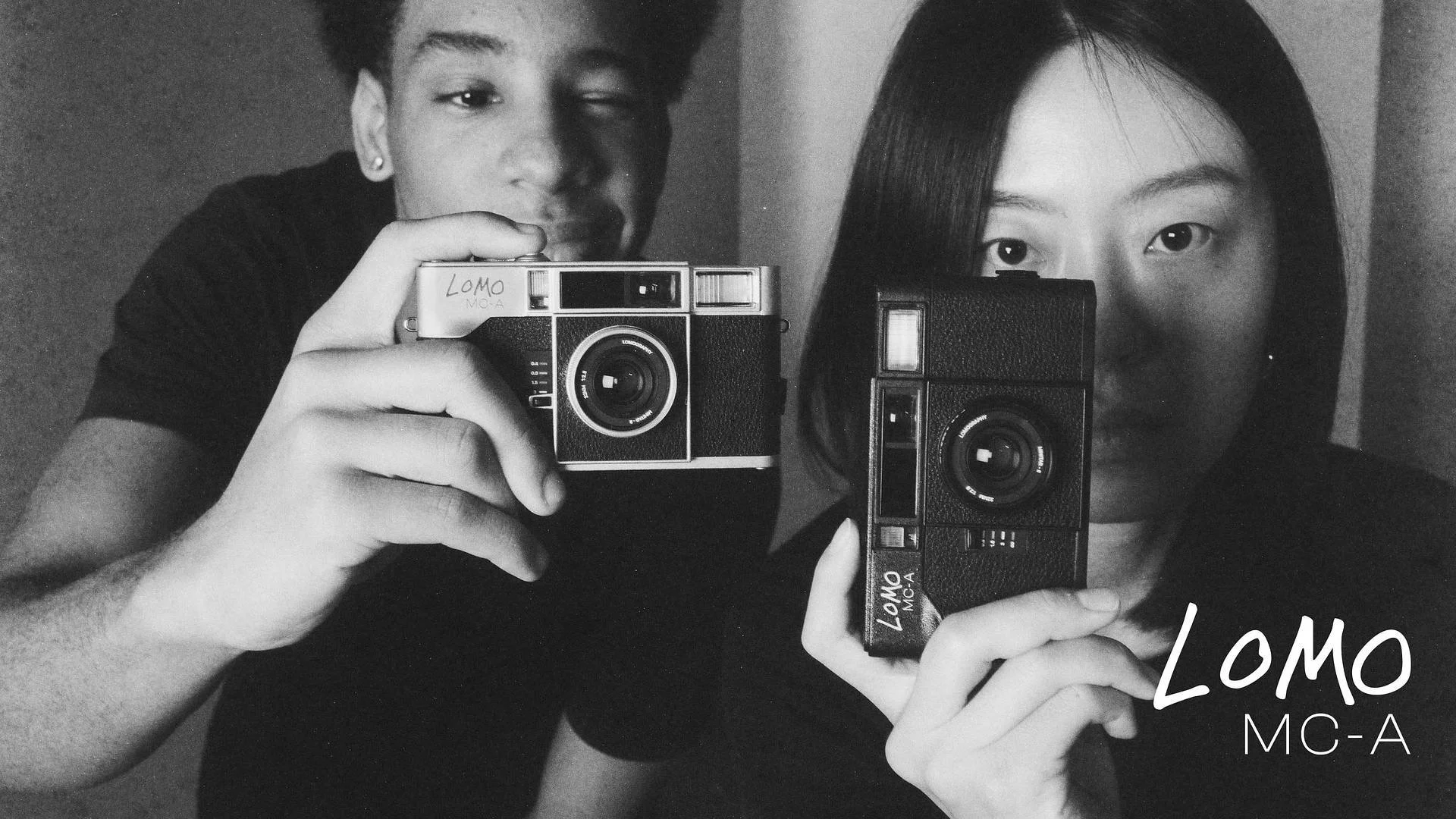
It’s sharp enough to make portraits pop and wide enough to capture your weekend adventures without needing to step back into traffic. That 32 mm focal length sits right in the sweet spot between wide and standard — a perfect everyday companion whether you’re shooting street scenes, travel photos, or family life.
If you’ve ever wished your favorite vintage compact had a new lease on life (and didn’t leak light like a sieve), this lens will feel like a familiar friend.
The Build: Sturdy. Sleek. Reliable.
Pick it up, and you immediately know this isn’t your average Lomography camera. The metal construction feels premium — the kind of weight that makes you trust it won’t crumble in your backpack. The controls are tactile, the dials click with confidence, and the ergonomics strike that balance between retro and comfortable.
It’s available in two finishes — classic silver and matte black — both of which scream vintage cool without being gaudy. Think “retro-futuristic point-and-shoot” rather than “hipster gimmick.”
The USB-C charging port is tucked discreetly on the side, giving it a modern edge while keeping the design clean. That might sound small, but the convenience of charging your camera with the same cable you use for your phone is worth celebrating.
Automatic, Aperture, or Full Manual — You Choose
Here’s where the MC-A stands apart from most of today’s film cameras: it’s not just point-and-shoot.
You can go full auto and let the camera handle everything (perfect for beginners or those quick-draw street shots). But you can also switch to aperture priority to control your depth of field or dive into full manual to fine-tune your exposure.
That kind of flexibility is rare in new film gear today. Most new 35 mm options either oversimplify things or throw you into the deep end with full manual only. The MC-A lands squarely in the middle — giving you room to grow.
It’s basically a camera that says: “You can start with me, and you’ll still be using me years from now.”
The Flash & Multiple Exposure Mode
Let’s be honest — Lomography has always loved creative features, and the MC-A doesn’t disappoint. The built-in flash offers multiple modes, including auto, fill, and off, plus a first-curtain sync option for those light-trail-and-movement experiments.
And then there’s multiple exposure mode — a Lomography staple. Whether you want to double your portraits with cloudscapes or stack silhouettes, it’s a playground for creativity straight out of the box.
In a time where most compact film cameras are simple point-and-shoot boxes, features like these make the MC-A stand out for people who actually want to experiment.
Battery Life & Usability
Good news: the MC-A uses a built-in rechargeable lithium battery, charged via USB-C. According to Lomography, one charge should last dozens of rolls — though your mileage may vary depending on how often you use the flash or LCD screen.
No more stockpiling CR123s or trying to find obscure button cells online. You can charge this camera anywhere, even from a power bank in the field. That’s a small but meaningful upgrade for anyone who shoots film regularly.
The small LCD screen on top gives you quick access to your mode and frame counter. It’s subtle and modern, but it doesn’t ruin the analog feel — just a nice touch of convenience.
Price: $499 and Worth Every Penny?
Let’s talk dollars. At launch, the Lomo MC-A retails for $499 USD — and yes, that’s a bit of sticker shock for a Lomography camera. But context matters.
Compare that to the secondhand market, where a clean Olympus Stylus Epic now sells for $400+, and a Contax T2 can easily break the $1,500 barrier. In that light, $499 for a brand-new, warrantied, metal-bodied compact with manual control suddenly feels like a bargain.
Plus, you’re not dealing with sticky shutters, expired light seals, or batteries that no longer exist. You’re buying a film camera that works today, with today’s tech, and will likely outlive most of the fragile point-and-shoots floating around on eBay.
It’s also worth noting that Lomography tends to keep their limited runs limited. Once these sell out, don’t be surprised if prices creep up.
Who It’s For
The MC-A sits perfectly between entry-level and pro. Here’s how it breaks down:
Beginners will love the automatic and aperture-priority modes, plus the fact that it’s dead simple to load and use.
Intermediate shooters will enjoy the manual mode and control over exposure.
Pros and collectors will appreciate the build quality, reliability, and that it’s a new camera in a market full of repair bills.
It’s especially appealing for anyone who wants to shoot film seriously without relying on decades-old gear. And for labs like ours at Shutter Junkies, that’s great news — more people shooting film means more beautiful negatives rolling through our scanners.
Real-World Use: What to Expect

From the first hands-on reviews, the MC-A is showing promising results. The lens delivers crisp images with a slightly warm tone — true to the Lomography look. The exposure system is accurate in daylight and surprisingly consistent indoors when paired with the flash.
It’s compact enough to toss in your bag but sturdy enough to feel like a “real camera.” Focus is manual zone style (like most classic compacts), so it rewards shooters who understand distance and composition. If you’re coming from digital, it’ll teach you to slow down and think before you shoot — and honestly, that’s half the fun of film.
Why It Matters for Film Photography
Every time a new film camera is announced, it’s a big deal. Manufacturing for film gear isn’t easy, and every modern release helps keep analog photography alive. The MC-A proves there’s still a market — and a growing one — for newfilm cameras built to last.
It also means younger photographers who fell in love with disposables or half-frames have a new “step-up” camera to graduate to. That’s healthy for the community, for labs like ours, and for the entire analog ecosystem.
When people buy new cameras, they buy film. When they buy film, they need developing. And when they develop, they discover places like Shutter Junkies Photo Lab — keeping the magic of film alive, one frame at a time.
Final Thoughts: Should You Buy It?
If you love film, want reliability, and don’t mind investing in something that will last for years, the Lomo MC-A is worth every penny. It’s stylish, solid, and refreshingly new in a sea of vintage uncertainty.
It’s not pretending to be a Leica, and it’s not trying to be a disposable. It’s something in between — a tool that invites creativity without breaking the bank.
Whether you’re capturing family moments, road trips, or weekend adventures, this camera feels like it’s made for film photographers today — the ones who value the craft, the process, and that satisfying click-wind-repeat rhythm we all love.
And when that roll is done?
You know where to send it. 😉
Develop your film at ShutterJunkies.org

Kodacolor is back: Eastman Kodak launches Kodacolor 100 & 200—and sells them itself
Kodak just shook up the film world by reviving Kodacolor—but this time, the Rochester giant is selling it directly, bypassing Kodak Alaris. With new 35mm ISO 100 and 200 rolls hitting shelves, this isn’t just about fresh packaging; it’s about Kodak taking control of its future. What does this mean for photographers, prices, and the supply chain we’ve all struggled with? Let’s dig in.
Film photographers just got a curveball we didn’t see coming. Eastman Kodak (the Rochester-based manufacturer) has launched KODACOLOR 100 and KODACOLOR 200—two daylight-balanced, color-negative 35mm films—and, for the first time in more than a decade, Kodak is distributing these rolls ITSELF rather than through Kodak Alaris. That single sentence is the headline and the plot twist.
What’s actually new here?
Three things.
1) New boxes on shelves: Kodacolor 100 and 200 are now listed on Kodak’s own site under “Still Film,” with product copy that emphasizes fine grain, saturated but natural color, high sharpness, and wide latitude. In other words: everyday, shoot-it-anywhere stocks.
2) Kodak is the seller, not Alaris: For years, the arrangement was simple if confusing: Eastman Kodak made the still films; Kodak Alaris marketed and sold them (Portra, Ektar, Gold, UltraMax, Ektachrome, etc.). Kodacolor changes that—Eastman Kodak is selling these rolls directly to distributors, a first in 10+ years. That’s not rumor; Kodak said so in its announcement.
3) Why do this now? Kodak says the direct-to-distributor move is meant to increase supply and “help create greater stability” in a market where prices have been swinging. This follows a 2024 production shutdown to upgrade the Rochester factory so it could meet surging demand for film. The timing makes sense.
The films at a glance
Formats & speed: 35mm (135), ISO 100 and ISO 200, both daylight-balanced C-41 color negative films.
Grain / look: Kodak markets both as fine grain, high sharpness, natural color, and wide exposure latitude—ideal for general picture-taking. Think travel, portraits, family, street in good light.
Exposures: 36-exposure rolls are already live at major retailers (B&H, among others).
Price (early days): We’re seeing listings around $8.99–$9.50 per roll—not official MSRPs, but a helpful ballpark as retailers open orders.
Where first: Kodak says the initial availability is U.S. and Canada, online and in-store at photo retailers.

Are these truly “new” emulsions?
Kodak’s language is careful: the company calls Kodacolor 100 and 200 “sub-brands of existing Kodak films.” That hints at familiar emulsions presented in new packaging/positioning, not chemistry never seen before. The company hasn’t said which stocks they map to, and that’s deliberate.
The photo press and retailer listings add a bit of color, with responsible caveats:
Some reporting suggests Kodacolor 200 looks like a rebrand of ColorPlus 200—a long-time budget favorite—though Kodak has not confirmed this.
Others note Kodacolor 100 might behave similarly to Pro Image 100 (again, not confirmed by Kodak). The early retailer copy describes a more natural, less punchy palette than Ektar 100, which lines up with that vibe.
Bottom line: expect friendly color, good skin tones, and latitude rather than the ultra-snap of Ektar or the premium skin-tone neutrality (and premium price) of Portra. We’ll know more as sample galleries and lab tests roll in, but the early take is “everyday usable” over “special-occasion specialized.”
Why this matters beyond the box
Supply and pricing stability: Kodak’s statement ties the direct-distribution move to supply and price stability. That’s significant in a year when film prices and availability have kept shooters guessing. If Kodak can take some friction out of the channel, shelves could stay fuller and prices less volatile.
Manufacturing capacity: The 2024 factory upgrades were framed as necessary to meet demand across still and motion stocks. A refreshed line plus a simpler distribution path is Kodak’s way of saying, “We’re investing in film.” That’s encouraging for anyone who loves the medium—and it counters the doom-scroll headlines.
The Alaris question: Since Kodak’s 2012 bankruptcy, Kodak Alaris (a separate UK-based company, recently sold to private equity) has controlled marketing and distribution of Kodak-branded still films, while Eastman Kodak manufactured them. Kodacolor doesn’t end that relationship, but it does show Eastman Kodak asserting direct control on at least part of the still-film lineup—an interesting precedent for the future.
How Kodacolor fits in Kodak’s lineup
Think of the family like this:
Ektar 100: ultra-sharp, saturated, punchy—loves lenses and light; can be ruthless on skin tones.
Portra (160/400/800): the portrait king—neutral, forgiving, pricey.
Gold 200 / UltraMax 400: consumer-friendly color with a warm tilt and familiar “Kodak” vibe.
ColorPlus 200: budget-minded, simple, classic look.
Kodacolor 100/200 aims squarely at the everyday sweet spot: clean grain, true-to-life color, and enough latitude to survive mixed light and the occasional metering miss—without the premium price of Portra or the saturated swing of Ektar. Early retailer descriptions even pitch Kodacolor as a better choice than Gold 200 when you want more naturalcolors, and less saturated than Ektar.
Early buying and shooting tips
Start where you shop now. Major U.S. retailers already list Kodacolor; if you see “in stock,” grab a couple of rolls to test. Price is competitive (sub-$10 as of this writing for 36 exposures), which is refreshing.
Pick 100 vs. 200 by light.
Kodacolor 100: crispest grain and highest sharpness; thrives in bright daylight, travel, landscapes, and flash portraits.
Kodacolor 200: a bit more flexibility for late afternoon, overcast, and indoor-with-window-light. Still not a night film, but a friendlier daily carry.
Expose generously. Kodak’s C-41 negs generally like a touch of overexposure. If you’re on the fence, rate at EI 80 (for 100) or EI 160 (for 200) and meter for the shadows. The “wide exposure latitude” messaging suggests they’ll take it well
Process is standard C-41. Any minilab or pro lab running color negative can handle it; scan at high resolution to enjoy the fine grain you’re paying for.
What it could mean next

Kodacolor 100/200 aren’t boutique experiments; they’re access films—priced and positioned to get more people shooting. If Eastman Kodak’s direct-to-distributor model works—keeping shelves stocked and prices calmer—expect ripple effects across the category. This could ease the bottlenecks that have frustrated newcomers and veterans alike, and it might give
A quick reality check on the branding
The Kodacolor name isn’t new; it’s a venerable Kodak brand dating back decades. Today’s Kodacolor 100/200 are modern color-negative stocks carrying that legacy banner. The company’s own phrasing—“sub-brands of existing Kodak films”—is a gentle reminder to judge them by results, not nostalgia or speculation. Shoot them, look at scans/prints, and decide where they land in your kit.
Our take
This is the kind of “quietly big” news film shooters should celebrate. The stocks look useful and affordable. The strategy—Eastman Kodak stepping in to sell still film directly—could help with the two pain points we’ve all felt: availability and price stability. And the timing follows a substantial factory upgrade meant to keep the emulsion train rolling. If you’ve been rationing Portra or wrestling with backorders, add Kodacolor 100 or 200 to your test queue this month and see if one of them becomes your everyday staple.
Sources & further reading: Kodak’s product pages for KODACOLOR 100 and KODACOLOR 200; coverage and context from Digital Camera World, Kosmo Foto, PetaPixel, 404 Media; retailer specs from B&H Photo Video; background on Kodak’s factory upgrade from The Verge.
Is This the End of Kodak and Film Photography?
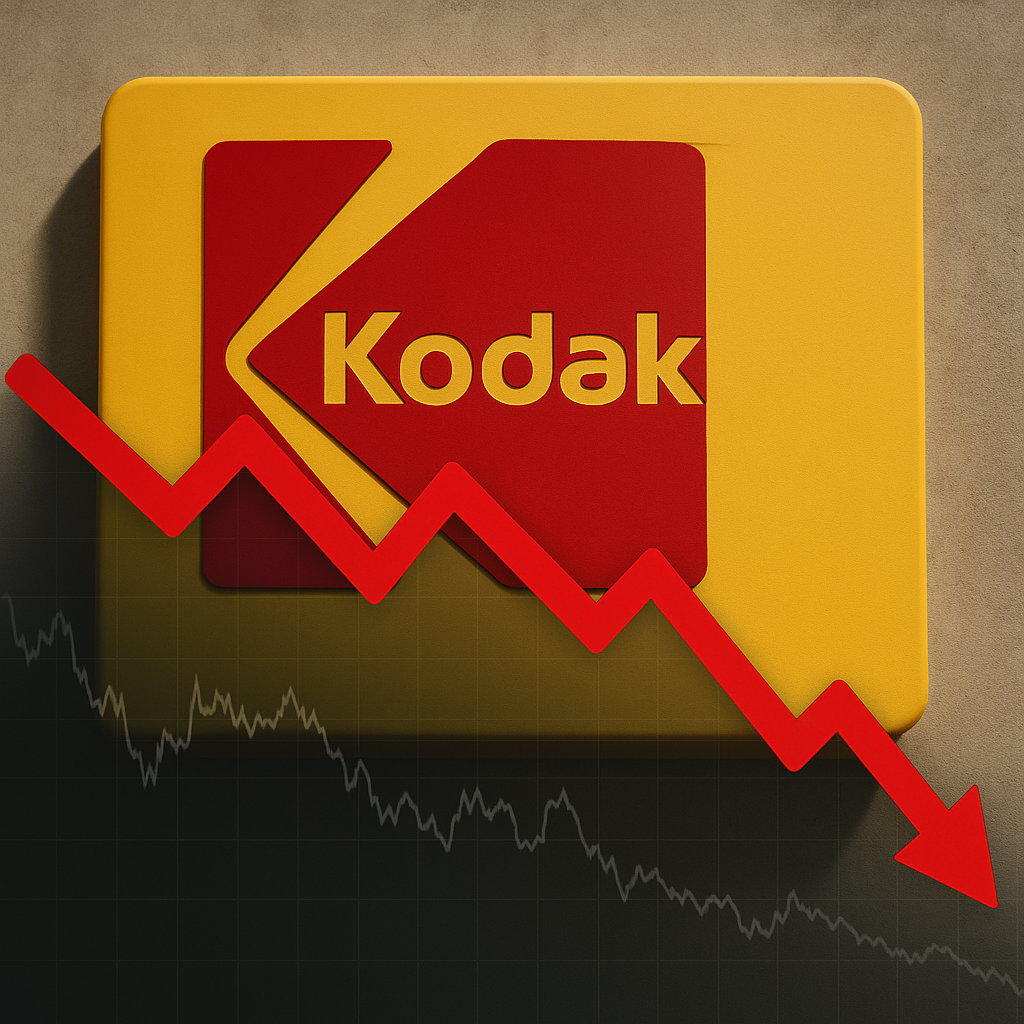
Kodak’s recent financial warning and steep stock drop have left many wondering if this is the final chapter for the once-dominant photography giant. While the company faces mounting debt and an uncertain future, film photography itself is far from over. A growing number of manufacturers—like Ilford, Harman, and Lucky—are releasing new films and keeping analog culture alive. Kodak’s struggle may mark the end of an era, but it’s also a reminder that the world of film is bigger, more diverse, and more resilient than one brand.
For over a century, Kodak wasn't just a company—it was the poster child of photography. It shaped how the world captured and preserved memories, from the Brownie camera to the iconic phrase “Kodak moment.” But today, the unthinkable specter looms: could the fall of Kodak signal the end of film photography? Let’s unpack the situation, then explore why the analog world might still have a bright future.
Kodak’s Plummet: How Bad Is It?
As of August 12, 2025, Eastman Kodak has issued a troubling going-concern warning, stating that it may not have enough liquidity or committed financing to safely meet its debt obligations over the next year. This is a formal admission that its financial foundation is shaky at best.
The market reacted swiftly and decisively. Kodak's stock plunged between 25% and 26%, landing around $5 per share. Meanwhile, reputable outlets like the Times of India and AP News have also flagged concerns, noting that Kodak’s inability to cover debts has sparked serious doubts about its capacity to continue as a going concern.
Moreover, the company has taken drastic steps, such as terminating its pension plan contributions, and is relying on the questionable potential of a pension reversion to shore up cash reserves—yet accounting rules delay recognition of those funds until December. Kodak holds $155 million in cash (with about $70 million in U.S. holdings), but with debt looming, that may not be nearly enough.
This isn't Kodak's first brush with collapse. Remember its 2012 Chapter 11 bankruptcy, when it emerged from under a mountain of $6.75 billion in debt? Today’s news signals that, despite a decade of effort to reinvent itself—through pharmaceuticals, chemicals, and printing—Kodak’s future remains perilously uncertain.
So yes—right now, it looks dire. The mightiest of film-era giants is visibly faltering.
But Film Isn’t Dead Yet: Other Players Are Stepping Up
All is not lost for the world of analog imagery. Thankfully, other manufacturers are continuing to invest in, innovate, and release new film—especially 35mm.
1. Harman (Ilford)
Under the umbrella of Ilford Photo and Harman Technology (UK), a host of timeless black-and-white films remain in steady production. Think FP4+, HP5+, Delta series, and new Kentmere variants as affordable options for modern photographers.
In 2025, Harman launched Phoenix II 200, a refined update to their high-contrast color negative film; and RED 125, a redscale version in 120 format released in June. These moves signal active R&D and experimentation.
They’ve also continued their Ultra Large Format (ULF) and custom-size film campaigns, inviting niche enthusiasts and artists to order uncommon film sizes—another encouraging nod to analog’s artisanal side.
2. Luckyfilm
Based in China, Luckyfilm reintroduced black-and-white classics like SHD 100 and SHD 400 in 2024. They’re even considering a return to color film if demand holds.
3. Ferrania (Italy)
Though not explicitly mentioned originally, launching films like P33 (ISO 160) in 2024 and Orto (ISO 50 orthochromatic) in 2023 highlights continued European analog activity.
4. Others
Analog.Cafe’s June 2025 recap noted new additions including Ilfocolor 400 Cine Tone, Harman Red (120), and other format expansions from niche suppliers Analog Cafe.
What This Means for Photographers: A Crossroads
Kodak’s downfall hurts—no doubt.
As a symbol, Kodak’s decline is deeply symbolic of analog photography's wider struggles. But its business troubles are not synonymous with the end of film.
The film ecosystem remains resilient and nimble.
Where Kodak may falter, smaller and more agile players continue to thrive, driven by community demand and creative passion. These companies can adapt nimbly and offer new, specialized products.
Artistic value and analog revival persist.
For many, the allure of film lies beyond nostalgia—it’s about texture, craft, and intention. With demand sustained by enthusiasts, educators, and artists, the market may continue to sustain analog projects, even if on a smaller scale.
So, Is This the End of Film Photography?
Not at all.
Film, like photography itself, has always been a medium shaped by flux. While Kodak’s potential collapse may mark the end of an era, it doesn’t signal the death of film. Instead, it's a reminder to diversify, support smaller suppliers, and celebrate analog’s ongoing evolution.
Finding Hope at the End
As you wrap up your blog post, consider leaping off the precipice of uncertainty into a space of renewed optimism:
Support independent film makers: Buying from Ilford, Harman, Luckyfilm, Ferrania, or Leica isn't just a purchase—it’s preservation.
Celebrate new releases: Phoenix II 200, RED 125, Monopan 50—they’re proof that creativity endures.
Explore niche formats: Ultra Large Format, custom films, and regional brands expand the palette of possibilities.
Document the renaissance: Share your analog journeys. Whether through blog posts, galleries, or local groups—film’s story is still being written.
Wrapping Up
Kodak's current crisis may feel like a shutter slamming shut on analog photography’s grand legacy, but the race isn’t over. Across the globe—from the streets of Shanghai to the labs of Mobberley—makers are still coating emulsion, winding film, and lighting darkrooms. The decline of one giant doesn’t equate to the end of a medium. Rather, it marks a tipping point—inviting new champions to step forward, new voices to tell old stories, and new images to be captured on silver and celluloid. Isn’t that what photography’s about, after all?

Disposable Cameras: The Perfect School-Friendly Alternative to Cell Phones
With school cell phone bans spreading across Texas, disposable cameras offer a fun, affordable, screen-free way for kids to capture memories at school.
Texas and many other states are moving forward with new legislation banning cell phones during the school day. In fact, starting in the 2025–26 school year, Texas public schools will begin enforcing House Bill 1481, which prohibits students from using phones, smartwatches, and other personal devices during school hours — even during lunch and passing periods.
So how do kids capture memories, field trip moments, or daily life at school without a smartphone in their pocket?
Enter the disposable camera — a low-cost, no-distraction, screen-free tool that’s making a big comeback among students, teachers, and nostalgic parents alike. Let’s explore why disposable cameras are the ideal solution for students during this phone-free era.
Why Disposable Cameras Make Sense for Students
1. No Screen Distractions
Disposable cameras can’t browse TikTok or send Snapchats. That means they won’t disrupt classroom focus or violate school policies. Kids can stay present while still documenting their experiences in a fun, creative way.
2. Simple, Durable, and Safe
Most disposable cameras are built tough. They’re compact, light, and resistant to drops. With a fixed lens and built-in flash, they’re ideal for kids to use on field trips, recess, or science projects without worry.
3. Budget-Friendly
At around $10 to $20 per camera, they’re far less risky than letting a child carry a $500+ smartphone. Even if it’s lost or broken, it’s an easy replacement.
4. Encourages Creativity and Mindfulness
With only 27 exposures per roll, disposable cameras make kids slow down, frame their shots, and think about the moment. It’s a refreshing counter to the “snap a hundred and delete later” mindset.
Disposable Camera Basics
📷 What Is a Disposable Camera?
A disposable camera is a one-time-use film camera, usually pre-loaded with 27 exposures of ISO 400 or 800 film. After using the entire roll, you turn in the whole camera for film development. Simple, fun, and completely offline.
💰 Cost Breakdown
| Expense | Low-End | High-End Chain | Lab with Negatives |
|---|---|---|---|
| Camera | $10–$12 | $12–$15 | Bulk/promo pricing |
| Processing + Scans | $9.50 | $14–$18 | $12 |
| Prints (Optional) | — | Included or +$12 | Optional |
| Negatives Returned? | Rare | No | Yes |
Total Average Cost: $20–$30 per camera including development and scans.
Where to Buy Disposable Cameras
- Local Retailers: Walmart, Target, CVS, Walgreens, Best Buy
- Online Stores: B&H Photo, Amazon, Adorama, Walmart.com
Popular options include:
- Kodak FunSaver – ISO 800, 27 exposures, built-in flash, ~$16
- Fujifilm QuickSnap – ISO 400, 27 exposures, built-in flash, ~$18–20
- Kodak Sport – Waterproof up to 50 feet, great for outdoor school events
Where to Get Disposable Cameras Developed
Local Options:
- Walmart: ~$10.96 for development with prints and digital scans (no negatives returned)
- Walgreens/CVS: ~$14–$18 for development with prints and scans (no negatives returned)
Mail-In & Independent Labs:
- Shutter Junkies Photo Lab: $12 for development + digital scans, prints extra, negatives returned. www.shutterjunkies.org
- The Darkroom: $13.25 with scans, negatives returned. thedarkroom.com
Tip: Always confirm whether negatives are returned when choosing a lab.
Using Disposable Cameras at School: Tips for Parents & Teachers
- Check school policy to make sure disposable cameras are allowed.
- Label the camera with the student’s name in case it gets lost.
- Use a soft pouch or case to keep it protected inside backpacks.
- Set expectations: explain how many photos they can take and how the flash works.
- Coordinate a collection day: Have students bring them in for bulk developing at the end of each month.
Educational Value: Photography as a Learning Tool
- Art & Composition: Use film to teach framing, light, and storytelling.
- Mindfulness: Fewer exposures = more intentional photography.
- Analog Skills: Kids learn patience and anticipation, waiting for prints and seeing how their photos turned out.
Bonus idea: Turn student photos into a hallway display or classroom photo gallery!
Conclusion: A Picture-Perfect Phone Alternative
With smartphones out of the classroom, disposable cameras offer a safe, affordable, and educational way for kids to capture the school year. They're screen-free, sturdy, and spark creativity — all while following school rules.
Looking for a great place to develop your disposable camera? We’d love to help! Visit our lab here at Shutter Junkies — we offer quick turnaround, high-resolution scans, optional prints, and return your negatives.
📸 Let kids document their school days the analog way. You’ll be surprised how meaningful it becomes.

Throwaway Camera vs. Reusable Film Camera: What’s the Difference?
Trying to decide between a throwaway camera and a reusable film camera? We break down the key differences in cost, image quality, features, and when to use each—whether you're a total beginner or a budding film enthusiast.

In the world of analog photography, two low-barrier, beginner-friendly options dominate the conversation: the throwaway camera (also known as a disposable camera) and the reusable film camera. At first glance, they may seem interchangeable. Both take 35mm film. Both are often made of plastic. Both tap into that nostalgic, vintage photo vibe.
But don’t let the similar packaging fool you—these two types of cameras have some big differences under the hood. And if you’re deciding which one to try (or gift, or bring on vacation, or start your film journey with), understanding how they work—and what they’re best for—will save you time, money, and some serious blurry-photo heartbreak.
Let’s break it down, frame by frame.
📦 What Is a Throwaway (Disposable) Camera?
A throwaway camera is a single-use film camera, typically preloaded with 27 or 36 exposures of 35mm color negative film. They are designed to be used once and then either tossed or handed over to a photo lab for processing.
✅ Key Features:
Preloaded with film (usually ISO 400)
Fixed focus and shutter speed
Some models include a built-in flash
Plastic lens and body
Meant to be used and then discarded or recycled
No film reloading or manual settings
💡 Typical Price:
Around $15–$25, depending on brand and film count
🛒 Popular Brands:
Kodak FunSaver
Fujifilm QuickSnap
Ilford HP5 Disposable (B&W)
Lomography Simple Use Camera
🔁 What Is a Reusable Film Camera?
A reusable film camera is exactly what it sounds like—a film camera that you can load, shoot, rewind, reload, and reuse again and again. Some of the most popular modern reusable cameras mimic the shape and style of disposable cameras, but they’re designed with reusability in mind.
✅ Key Features:
Takes standard 35mm film rolls
Refillable—can be used multiple times
Some have basic exposure controls
May include flash or fixed focus lens
Slightly more robust than disposables
You supply the film, usually
💡 Typical Price:
Basic models: $25–$50
Upgraded or vintage compacts: $60–$200+
🛒 Popular Brands:
Kodak M35 / M38
Ilford Sprite 35-II
Lomography Simple Use (reloadable version)
RETO Ultra Wide & Slim
Vintage options (Canon Sure Shot, Olympus Stylus, etc.)
🥊 Side-by-Side Comparison
| Feature | Throwaway Camera | Reusable Film Camera |
|---|---|---|
| Film Included | Yes (usually preloaded with ISO 400) | No (you buy and load your own) |
| Reuseable? | No (single-use) | Yes (reloadable and long-lasting) |
| Image Quality | Moderate to low | Varies (better with lens + film choice) |
| Settings | None (point-and-shoot) | Sometimes basic manual options |
| Build Quality | Basic plastic, not built to last | More durable, some have metal parts |
| Environmental Impact | Higher (single-use plastic) | Lower (used multiple times) |
| Cost Per Roll | Higher (since camera is single-use) | Lower over time |
| Great For | Events, weddings, kids, parties | Hobbyists, students, travel, everyday |
🧪 Image Quality: The Big Tradeoff
Let’s talk results. The number one question we get at Shutter Junkies is:
“Will my photos turn out better with a reusable camera?”
The short answer:
Yes, but it depends on the camera and the film.
Throwaway cameras are fun, but limited. The plastic lens produces soft, low-contrast images, and without any exposure control, you’re at the mercy of whatever lighting conditions you’re in. Great sunlight? You’re golden. Low light? Expect blurs, grain, or dark shadows.
Reusable cameras give you more options:
Load color or black-and-white film
Choose ISO based on lighting conditions
Upgrade to better film stocks (Portra, Ektar, etc.)
Benefit from higher-quality lenses in some models
The difference becomes obvious when you get your scans back. If you care about color accuracy, sharpness, and getting more than just “vibe,” the reusable option is worth it.
🎉 When to Use a Throwaway Camera
Despite their limitations, throwaway cameras shine in certain situations. They’re simple, low-stakes, and nostalgic.Here’s when they’re perfect:
🥂 1. Weddings & Parties
They’re cheap, easy to hand out to guests, and ideal for capturing goofy moments. No one worries about breaking it or getting it dirty.
🏖️ 2. Beach or Travel Adventures
You can find waterproof disposable cameras for snorkeling, rainy hikes, or poolside selfies. And if you lose it? No big deal.
👧 3. Kids & First-Time Shooters
Throw one to your kid on a field trip or vacation—let them shoot without fear of breaking a fancy camera.
🧪 4. Creative Limitations
Want to shoot a whole roll with one theme or limit yourself to 27 frames? Use a throwaway as your project camera.
🧠 When to Choose a Reusable Film Camera
If you’re falling in love with film and want to get better, save money, and reduce waste—reusable is the way to go.
🎓 1. Learning Film Photography
You’ll understand film speed, exposure, and composition better when you can choose your settings and film type.
🏕️ 2. Ongoing Projects
Want to shoot a roll a week? Document a long-term trip? Capture your kids growing up? Use a reusable camera and change film types as you go.
💸 3. Save in the Long Run
A $30 reusable camera + $6 roll of film is cheaper than buying a $20 throwaway every time.
♻️ 4. Reduce Waste
No tossing plastic after one roll. Use one camera for dozens (or hundreds) of rolls.
💵 Cost Breakdown Over Time
Let’s say you shoot one roll per month for a year.
🔥 Throwaway Camera Cost (12 months):
12 cameras × $20 = $240
🧊 Reusable Camera Cost (12 months):
Camera = $35
Film = $6 × 12 = $72
Total = $107
That’s over $130 saved—plus you keep the camera!
📸 Real-World Examples
Throwaway Camera Samples:
Washed-out beach scenes with blinding flash
Wedding reception dance floors full of blur and laughter
Misty morning hike with unexpected grain = "vintage vibe"
Reusable Camera Samples:
Sharp portraits on Kodak Gold
Rich fall colors using Ektar 100
Soft black-and-white street shots with Ilford HP5
At Shutter Junkies, we’ve seen every type of camera come through our lab—and we’ve scanned it all. The joy of film is that every roll has surprises, but if you want more control over those surprises, go reusable.
🤔 Common Questions
Q: Can I reload a throwaway camera?
Technically yes, but it’s a pain. They’re not built for it, and doing so may damage the camera or scratch your film. It’s like reusing a paper plate—it’s just not the same.
Q: Is a reusable film camera hard to use?
Nope. Most models are just as point-and-shoot as throwaways. Some even have built-in flash and simple focus zones.
Q: Where can I get my film developed?
Glad you asked! At Shutter Junkies Photo Lab, we process, scan, and even print your 35mm film. Whether it came from a throwaway or a Leica, we’ve got you covered.
🛠️ Our Favorite Models
If you’re ready to step up from a throwaway, here are a few beginner-friendly reusable options:
📷 Kodak M35 / M38
Classic disposable look, but reloadable
Flash built in
Works great with ISO 200–400 film
📷 Ilford Sprite 35-II
Sleek, black-and-white vibe
No frills, easy loading
📷 RETO Ultra Wide & Slim
Quirky ultra-wide lens
Tiny, light, fun to shoot
🧵 Final Thoughts
There’s no wrong choice—only the one that works best for you.
If you want to relive a childhood memory, capture a party without stress, or just dip your toe into film, a throwaway camera is a great place to start.
If you’re ready to build some skills, stretch your dollar further, and reduce waste, a reusable film camera is your best bet.
Either way, film photography is about slowing down, being intentional, and enjoying the journey—not just the results.
So go shoot that roll. And when you're ready to see what you got, send it our way.
🧪 Ready to Develop?
🎞️ Whether it’s a $12 throwaway or a $200 vintage gem, we’ll process your film with care.
👉 Order Film Developing at Shutter Junkies

So You Wanna Shoot a Half-Frame Camera? Here's What Could Go Hilariously Wrong
Half-frame cameras sound fun—72 photos on one roll? Yes, please! But the reality? Blurry shots, plastic bodies, exposure disasters, and rewind fails. We break down all the ways your roll can go sideways—plus how to avoid the biggest mistakes. Whether you're new to film or just curious, this brutally honest (and slightly hilarious) guide will help you survive the quirks of half-frame photography.

There’s something undeniably charming about half-frame cameras. Maybe it’s the promise of 72 shots on a single roll of film. Maybe it’s the teeny-tiny size. Maybe it’s the aesthetic of shooting like you’ve time-traveled to 1965. Or maybe, just maybe, it’s because you saw a viral post about them on Instagram and thought, “Oh yeah—I need that.”
But here’s the thing: shooting a half-frame camera is kind of like raising sea monkeys. It sounds easy, but if you’re not careful, you’ll wind up confused, slightly disappointed, and wondering what you did wrong.
Let’s walk through some of the most common half-frame hiccups we see at Shutter Junkies—from exposure woes to existential dread halfway through a 72-exposure roll. If you’ve ever sent us your film and thought, “Huh… that’s not how I remember that looking,” this one’s for you.
☀️ 1. Exposure Roulette: Fixed Settings = Fixed Disappointment
Most half-frame cameras were never designed to make your life easier. They were designed to be cheap, compact, and fast—like the fast food of cameras. As a result, most of them come with fixed aperture, fixed shutter speed, and infinite focus. The most popular half-frame camera out there is the Kodak Ektar H35 Half-Frame camera and it’s basically a slightly fancier half-frame disposable that you can actually reuse. Designed for simplicity and ease of use, it lacks a lot of features that are present on even some of the most basic 35mm film cameras.
But having everything fixed and set sounds simple, right? Until you try to shoot a backlit subject and end up with a glowing silhouette straight out of a horror movie. Or you step inside a dimly-lit café and your photos come out looking like you accidentally exposed the roll in your pocket.
Without adjustable settings, your exposure success is mostly left to fate and daylight. And listen, we love the analog vibe, but there's a big difference between “moody underexposed” and “can’t tell if that’s a person or a ghost.”
Pro Tip: Stick to bright daylight. Avoid shadows. And maybe just say a little prayer before each frame.
🧃 2. Built Like a Juice Box
Have you ever held a plastic half-frame camera and thought, “Wow, this feels like a Happy Meal toy”?
You’re not alone.
Most modern half-frame cameras (and even some vintage ones) are constructed from ultra-light, questionably durable plastic. They’ll rattle if you shake them. They’ll crack if you drop them. And they’ll absolutely betray you if you put them in a backpack without a padded case.
We’ve seen cameras come into our lab with duct tape holding them together. (Yes, really.) One customer mailed in a roll and included a note that read, “Camera died after photo 31. R.I.P.” We held a moment of silence.
Moral of the story: treat your half-frame camera like an egg—precious, delicate, and likely to break if you look at it wrong.
🔍 3. Professional Film in a Plastic Box? Prepare for Soft Disappointment
Here’s a tale as old as time:
Someone loads a roll of Kodak Portra 800 into a $40 half-frame camera and expects editorial magic. After all, it’s the same film the pros use, right?
Well… sort of.
See, half-frame cameras often come with low-grade plastic lenses that add softness, distortion, and that unique "shot through a bottle of Windex" look. Even with top-tier film, the lens can only do so much. Your beautifully-lit scene might come out looking like it was run through an Instagram filter called “Confusion.”
Don’t get us wrong—we love quirky, lo-fi photos. But if you’re expecting razor-sharp detail and rich contrast, you're setting yourself up for heartbreak.
Pro Tip: Save the fancy film for a full-frame camera. Pair half-frame cameras with budget-friendly stock like Kodak Gold or ColorPlus. Embrace the grain. Lean into the blur.
🔓 4. Curiosity Killed the Roll
You know that little back door on your camera? The one you’re not supposed to open until the roll is finished and rewound?
Yeah… we need to talk about that.
Half-frame cameras are notorious for having terrible or nonexistent frame counters. Which means it’s very easy for users—especially those new to film—to accidentally open the camera mid-roll.
We’ve heard every reason:
“I thought it was empty!”
“I was just checking!”
“I didn’t know how to rewind it!”
“I got excited!”
Unfortunately, that little peek usually exposes several frames to light, if not the entire roll. You might get lucky and only ruin the middle. But if you’re really unlucky, all 72 shots might go up in a puff of light-leaked smoke.
Best advice? Leave that door shut. Tape it closed if you have to. Or write “DO NOT OPEN” in big letters with a Sharpie. Future-you will thank you.
🧬 5. The Grain Is Real
Quick science lesson: half-frame film is literally half the size of a standard 35mm negative. That means your image is being recorded on a much smaller space—so when it gets scanned or printed, the grain gets more pronounced.
Think of it this way: if 35mm is vinyl, half-frame is cassette tape. Still analog, still charming—but there’s gonna be a lot more texture.
And with today’s high-resolution scanners? That grain becomes very noticeable. Especially if you shoot higher-ISO films like 400 or 800. You might start to think your camera was shooting sandpaper.
Again, some people love the gritty aesthetic. But if you’re expecting silky smooth tones, you might be in for a rude, pixelated awakening.
🐢 6. 72 Shots of What, Exactly?
When you first hear “72 photos on one roll,” your brain lights up like it’s Christmas. Twice the photos for the same price? Sign me up!
But somewhere around exposure #46, the novelty wears off. You’ve already shot your cat, your lunch, a flower, three blurry street signs, and a series of identical selfies by accident.
We’ve had customers send in half-used rolls with notes like:
“Got bored.”
“Out of ideas.”
“Thought it was done, but it kept going.”
It’s real. Half-frame fatigue is a thing.
So what happens when you get bored and decide to rewind early? Half the roll is blank. Wasted. Lonely. Unfulfilled.
Pro Tip: Plan a photo series. Try diptychs or side-by-sides. Use themes to keep yourself engaged. Or… just take a break. Come back to the roll next weekend. It’ll wait.
🔁 7. Rewind Roulette: The Art of Mangling a Roll
If we had a nickel for every time a half-frame roll came in bent, scratched, or backwards, we could open a second lab.
Rewinding film might seem simple. But many half-frame cameras have quirky rewind mechanisms that confuse even seasoned shooters. And because most don’t have motorized rewind, you have to do it manually.
Which leads to:
Rewinding the film backwards into the canister
Not rewinding far enough and popping the back open (hello, light leaks)
Bending or scratching the film on the way out
We’ve seen reels so twisted they look like pasta noodles. And sadly, scratched emulsion is forever.
Best advice: Read the manual (seriously). Watch a YouTube video for your model. And rewind slowly, patiently, like it’s your grandmother’s jewelry box.
Final Thoughts: It’s a Vibe (And a Gamble)
Half-frame photography is kind of like analog slot machines: you crank, shoot, hope for the best, and sometimes strike gold.
Yes, things will go wrong.
Yes, your film will probably have weird quirks.
Yes, you'll wonder why every shot is blurry, grainy, or inexplicably sideways.
But here's the beautiful part: half-frame isn’t about perfection. It’s about experimentation. It’s about shooting freely. It’s about embracing a slower, sillier kind of photography.
And when it works? It really works.
Thinking of Trying a Half-Frame Camera?
Here’s our advice:
Don’t use your most expensive film.
Stick to bright daylight.
Tape the back shut.
Learn how to rewind it properly.
Give yourself time to finish all 72 frames.
And most of all—have fun.
Because at the end of the day, that soft, grainy, slightly-overexposed shot of your dog blinking? That’s not just a mistake—it’s a memory.
📮 Shot a roll on your half-frame? Let us develop it for you!
Order film developing at Shutter Junkies
🎞️ Want more film photography stories, tips, and cautionary tales?
Check out our other blog posts!

🎞️ The Ultimate Guide to Color Negative 35 mm Film
Explore every 35mm color negative film available in 2025, including Kodak, CineStill, and Fujifilm. Compare ISO, color styles, and buy the best film for your style.
Introduction
Film enthusiasts rejoice—in 2025, color negative 35 mm film continues to thrive, with options ranging from classic stocks to creative specialty emulsions. Whether you’re shooting portraits, landscapes, low light, or cinematic scenes, here’s what’s on the shelves now.
1. Kodak
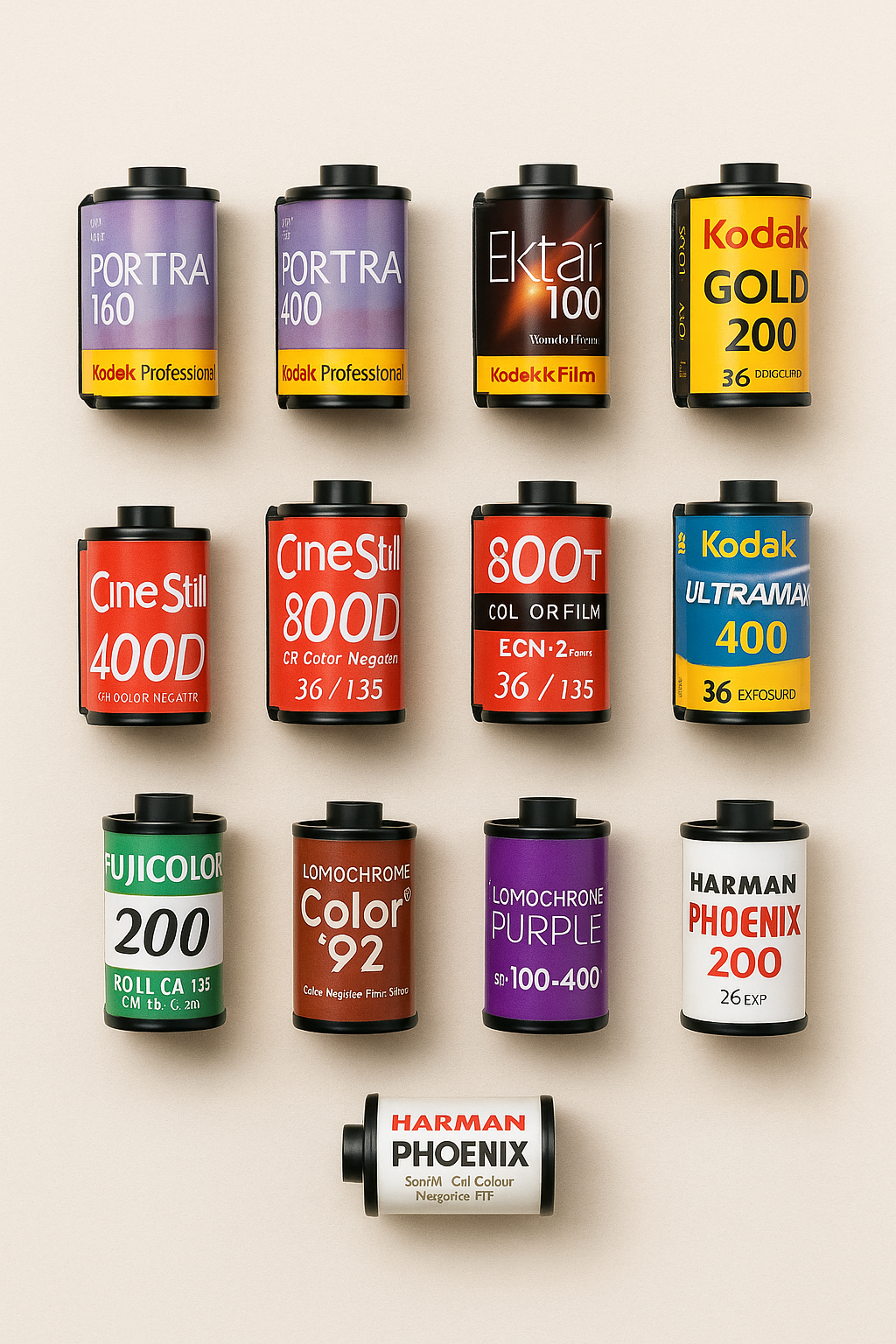
Kodak Portra (Professional)
Speeds: 160, 400, 800 ISO
Emulsion: Very fine grain, low contrast, balanced color—ideal for portraits, weddings, travel
Use: Portraiture, soft natural skin tones
Manufacturer: Kodak Portra page
Buy:
Kodak Ektar 100
ISO: 100
Emulsion: Extremely fine grain, ultra-vivid color, high sharpness—great for landscapes and nature
Use: Landscape, still life, bright daylight scenes
Manufacturer: Kodak Ektar page
Buy: Single roll at B&H
Kodak Gold 200 / ColorPlus 200
ISO: 200
Emulsion: Warm, vivid tones; more grain, budget-friendly
Use: Beginners, everyday shooting, general daylight
Buy:
Kodak UltraMax 400
ISO: 400
Emulsion: Rich saturation, good grain, wide exposure latitude
Use: Versatile for both indoor and outdoor shooting, budget-friendly
Buy: B&H
Kodak Pro Image 100
ISO: 100
Emulsion: Professional-grade sharpness and color saturation
Use: Portraits in daylight, fine-art color
Buy: 5‑pack: B&H
2. Fujifilm
Fujicolor 200 / Fujifilm 200
ISO: 200
Emulsion: Fine grain, daylight-balanced, natural colors
Use: Balanced color scenes in good light
Buy: 3‑pack: B&H
3. CineStill
CineStill 400 D (Daylight)
ISO: 400
Emulsion: Motion picture film reworked for stills; fine grain, soft palette
Use: Outdoor portraits, cinematic vibe
Buy: B&H
CineStill 800 T (Tungsten)
ISO: 800
Emulsion: Tungsten-balanced, Rem-Jet removed, filmic glow
Use: Indoor, nightlife, cinematic tungsten lighting
Buy: B&H
CineStill 50 D (Daylight Xpro)
ISO: 50
Emulsion: Unique halation (Xpro C-41), cinematic bloom
Use: Bright daylight, creative looks
Buy: B&H
4. Lomography
LomoChrome Color ’92 (400 ISO)
ISO: 400
Emulsion: Modern cross-processed look, vivid contrast
Use: Creative experimental photography
Buy: Amazon
LomoChrome Purple (100–400)
ISO: 100–400
Emulsion: Stylized purple shifts, dreamy color palette
Use: Surreal creative projects
Buy: Amazon
LomoChrome Metropolis (100–400)
ISO: 100–400
Emulsion: Muted vintage tones, muted palette
Use: Urban, retro mood photography
Buy: Amazon
5. Harman / Ilford Imaging
Harman Phoenix 200
ISO: 200
Emulsion: New UK-made film, analogue aesthetic en.wikipedia.org+1time.com+1culturedkiwi.comreddit.com
Use: Nostalgic, low-key color
Buy: Glazer’s Camera
6. Specialty & Cine Stocks
Ferrania P30 / Solaris – niche Italian emulsions, subject to limited availability
AgfaPhoto – occasional relaunches; check retailer websites
Svema, ORWO, Shanghai – Eastern European stocks, limited runs
🎯 Quick Comparison Table
| Film Stock | ISO | Look | Budget | Use Case |
|---|---|---|---|---|
| Portra 160/400/800 | 160-800 | Fine grain, balanced, soft | $$$ | Portraits, professional use |
| Ektar 100 | 100 | Vivid, sharp, ultra-fine grain | $$ | Landscape, daylight |
| Gold 200 / ColorPlus 200 | 200 | Warm, vivid, more grain | $ | Everyday, beginners |
| UltraMax 400 | 400 | Rich, versatile | $ | General purpose |
| Pro Image 100 | 100 | Saturated, sharp | $$ | Portrait, daylight |
| Fujicolor 200 | 200 | Natural, fine grain | $$ | Daylight, general use |
| CineStill 400D | 400 | Cinematic, soft tones | $$-$$$ | Outdoor cinematic scenes |
| CineStill 800T | 800 | Tungsten, halation glow | $$-$$$ | Indoor, night scenes |
| CineStill 50D | 50 | Bright, halation effects | $$-$$$ | Daylight creative shots |
| LomoChrome Color 92 | 400 | Pop colors, retro style | $$ | Creative expression |
| LomoChrome Purple | 100-400 | Purple-shift, surreal | $$ | Experimental photography |
| LomoChrome Metropolis | 100-400 | Muted, vintage tones | $$ | Urban, retro scenes |
| Harman Phoenix 200 | 200 | Analogue, vintage feel | $$ | Everyday film photography |
Tips for Choosing the Right Film
ISO Matters
Use 100–200 for bright daylight; 400+ for indoor or low-light scenes.
Emulsion Look
Portra for natural skin tones, Ektar for punchy landscapes, CineStill for cinematic looks.
Experimentation
Try Lomography and CineStill to discover creative color shifts and effects.
Budget & Availability
ColorPlus and Gold balance cost and performance; specialty stocks may be limited in supply.
Conclusion
With choices ranging from professional-grade precision to experimental styling, the current market offers something for every film photographer. Stock up on a variety and discover what suits your eyes and vision best! 🎬

How to Shoot Your First Roll of 35mm Film: A Beginner’s Guide to Analog Photography
New to film photography? Learn how to shoot your first roll of 35mm film with this step-by-step guide for beginners. From loading your camera to developing your film, we cover it all.

So, you've got your hands on a 35mm film camera—maybe it's a thrift store find, a hand-me-down from your uncle, or a recent eBay score. You're holding it, excited but unsure. You’ve heard film photography is back, but... where do you even start?
If you're about to shoot your first roll of 35mm film, welcome to the wonderfully unpredictable, nostalgic world of analog photography. This guide will walk you through everything you need to know to load, shoot, and finish your first roll with confidence—plus what to do once it’s ready to develop.
📦 Step 1: Gather Your Gear
Before you shoot, make sure you have the essentials:
A 35mm film camera (manual or automatic)
A fresh roll of 35mm film (we recommend Kodak Gold 200 or Fujifilm Superia for beginners)
A working battery if your camera uses one
A camera strap or case for protection
Optional: light meter app on your phone if your camera doesn’t have one
Choosing Film
Not all film stocks are created equal. Some are better for daylight, others for low light. Some have fine grain; others are moodier. Here are a few beginner-friendly options:
Kodak Gold 200 – Affordable, warm tones, great in daylight
Ilford HP5 Plus 400 – A classic black-and-white film with lots of flexibility
Kodak Ultramax 400 – Good all-rounder, decent for indoor or outdoor shots
🔄 Step 2: Load the Film (Don’t Panic)

Loading 35mm film can be intimidating, but once you’ve done it a few times, it’s second nature.
Open the back of your camera. There should be a switch or lever.
Insert the film canister on the left side and pull the film leader across to the right.
Insert the leader into the take-up spool. Advance the film using the lever or button.
Make sure the sprockets catch. The little holes on the film should line up with the gear teeth.
Close the back. Advance the film and click the shutter a couple of times until the frame counter shows “1.”
💡 Pro Tip: Some cameras auto-load, while others require manual winding. If you're unsure, look up your camera model’s manual online.
🌞 Step 3: Understand Light and ISO
Every roll of film has an ISO (also called ASA) rating—usually 100, 200, 400, or 800. This determines how sensitive the film is to light.
ISO 100–200: Great for sunny days and outdoor shooting
ISO 400: Good for versatile lighting situations
ISO 800+: Better for indoor, low light, or evening shots
Set your camera’s ISO dial to match your film. Most cameras have a ring or switch to adjust this setting.
📷 Step 4: Compose and Shoot
You're ready to take pictures—now what?
Focus. If your camera is manual focus, turn the lens ring until your subject is sharp.
Meter the light. If your camera has a built-in light meter, follow its guidance. If not, use a smartphone app like “Light Meter” or “Lux.”
Adjust your settings. Shutter speed and aperture matter! A good starting point on a sunny day is the “Sunny 16 Rule”: set aperture to f/16 and shutter speed to the inverse of your ISO (e.g., 1/400 for ISO 400).
Frame your shot. Think about composition—rule of thirds, leading lines, symmetry.
Click the shutter. Congrats, that’s one frame down!
Repeat for 24 or 36 exposures, depending on your roll.
⚠️ Step 5: Don’t Open the Back (Seriously)
Until you finish your roll and rewind the film, do not open the camera’s back door. Doing so will expose your film to light and ruin your shots. If you're curious what's going on in there—resist the urge. Trust us.
🔄 Step 6: Rewind Your Film
Once you’ve shot all your frames, it’s time to rewind the film into its canister.
On manual cameras, press the rewind release button (usually on the bottom) and turn the rewind crank clockwise.
You'll feel tension at first, then it will loosen—this means the film is safely back in the canister.
Open the back of the camera and remove your roll. You did it!
📮 Step 7: Develop Your Film
Now comes the exciting part: seeing what you captured.
You have two main options:
🧪 Option 1: Develop at Home
Advanced, requires equipment and chemicals. Not recommended for first-timers.
📦 Option 2: Send It to a Lab
That’s where we come in.
At Shutter Junkies Photo Lab, we make it easy to develop your 35mm film—whether you’re in Greenville, TX or across the country. Just mail it in or drop it off, and we’ll develop, scan, and even print your photos for you.
👉 Click here to order film developing
💬 Final Thoughts: Embrace the Process
Shooting your first roll of 35mm film is a rite of passage. It’s slower than digital, sure—but that’s the magic. You’ll learn to be present, to compose with intention, and to appreciate the surprise that comes with every roll.
Don’t worry about perfection. Embrace the light leaks, the blur, the occasional over- or underexposure. That’s what makes film beautiful.
Welcome to the analog club!

Why Film Just Hits Different: The Disposable Camera Aesthetic
Disposable cameras have become so popular that retailers are having a hard time keeping them in stock. Why are disposable cameras so popular with Gen Z and Millennials?

In a world of ultra-sharp phone cameras and AI-enhanced everything, why are people still obsessed with disposable cameras?
Why do wedding photographers include film add-ons, why do teenagers carry plasticky Kodaks to music festivals, and why do TikTokers crave that blurry, grainy, flash-popped look?
Because film just hits different—and disposable cameras are the purest, grittiest, most accessible version of it.
In this post, we’re digging into the psychology, art, and nostalgia of the disposable camera aesthetic. Whether you’re a seasoned film junkie or someone who just picked up a Fujifilm QuickSnap for the first time, this is for you.
📸 What Is the Disposable Camera Aesthetic?
The disposable camera aesthetic is all about imperfection.
Think:
Soft focus
Flash burn
Unexpected light leaks
Grainy shadows
Slightly off-center compositions
Warm or yellow-tinted color tones
Moments that feel more felt than filtered
It’s a vibe that screams authentic, unguarded, and nostalgic.
Where modern digital photos are hyper-edited and pristine, disposable camera images feel like memories you’re still trying to hold onto.
They’re real, raw, and often a little bit chaotic—and that’s exactly what makes them beautiful.
🎞 A Brief History: From Utility to Art Form
Disposable cameras were introduced in the 1980s as a cheap, no-fuss alternative to traditional 35mm film cameras. Their goal? Convenience, not artistry.
Kodak released their first disposable camera, the Kodak Fling, in 1987.
Fujifilm and others followed suit, producing single-use cameras with flash for tourists, party-goers, and casual shooters.
But something funny happened along the way.
What started as a throwaway product became a cult favorite among photographers, artists, and even fashion brands.
Today, disposable cameras have evolved from practical tools to artistic choices.
💥 Why the Aesthetic Stands Out (Even in a Digital World)
1. The Limitations Spark Creativity
With just 24 or 27 shots per camera, every click matters. You can’t spam the shutter. You have to think. You have to feel.
“When every shot counts, you start paying attention to light, composition, and emotion in a way that digital doesn't force you to.”
— Every photographer who ever shot film, probably
These limitations slow you down and make you present—two rare things in modern photography.
2. Flash Changes Everything
The cheap, direct-on flash of a disposable camera isn’t subtle. It’s harsh, bright, and oddly charming.
It blows out foregrounds.
It darkens backgrounds.
It adds that “Y2K house party” glow.
It makes everything feel like a memory from 2002.
There’s nothing like that classic point-and-shoot flash aesthetic—and it’s nearly impossible to replicate digitally.
3. Grain > Perfection
In digital photography, grain (or noise) is a flaw. In film photography, it’s character.
Grain gives images a textural, cinematic quality. It’s not just random noise—it’s silver halide crystals that caught light in real time.
The disposable camera aesthetic embraces that grain. It adds mood, emotion, and timelessness to otherwise ordinary scenes.
4. Surprise and Delay
You don’t get to see your image right after you shoot it. You have to wait to develop the film. That delay does something magical:
It breaks the habit of perfectionism.
It shifts your focus from instant validation to long-term meaning.
It gives you a sense of anticipation and mystery.
When you finally develop your film, it’s like opening a time capsule.
5. Authenticity Over Filters
Instagram filters try to mimic the look of film, but most can’t replicate the organic flaws that come from real light, real film, and real randomness.
Disposable cameras offer:
Real lens distortions
Unpredictable color shifts
Occasional double exposures or frame burns
The result? Images that don’t look curated—they look lived.
🧠 The Psychology of Film Nostalgia
Why are people—especially Gen Z—so drawn to analog photography?
✨ It Feels Human
Digital images are clean, bright, and hyper-real. But they can also feel clinical. Film is softer, warmer, more forgiving. It feels like memory. It feels like us.
🧒 It Reminds Us of Childhood
Even if you didn’t grow up in the '90s, disposable cameras are loaded with that retro birthday party energy.
The flash over a cake
The candid cousins on a couch
Blurry dad in the background
These imperfections trigger emotional memory recall in a way perfect digital images never do.
🎯 It’s Rebellious
In a world obsessed with pixel peeping, megapixels, and flawless selfies, film says: “I don’t care.”
Shooting on a disposable camera is a rebellion against the pressure to be polished.
It’s saying:
"I don’t need to be perfect—I just need to be present."
🎨 How to Lean Into the Disposable Camera Aesthetic
Whether you’re using a true disposable or editing your digital photos to mimic the vibe, here are ways to embrace it:
1. Use the Flash—Even in Daylight
Trust us. That slightly washed-out look is gold. Especially for:
Indoor parties
Close-up portraits
Street shots
2. Shoot From the Hip
No need to perfect your framing. Some of the best shots come from surprise angles and quick captures.
3. Focus on Candid Moments
The less staged, the better. Laughs, weird faces, behind-the-scenes chaos—all fair game.
4. Don’t Overthink It
You’re not shooting for perfection. You’re shooting for feeling.
📷 Best Disposable Cameras to Try the Aesthetic
Want to dive into it for yourself? Here are some fan favorites:
✅ Kodak FunSaver
ISO 800
Great for day or night
Warm, punchy colors
Classic 90s look
✅ Fujifilm QuickSnap Flash
ISO 400
Natural tones
Built-in flash
Reliable and sharp
✅ Ilford HP5+ Single Use (B&W)
ISO 400 black-and-white film
For that gritty, timeless look
You can order all of these online, or check out your local camera shop. At Shutter Junkies Photo Lab, we keep them stocked and ready to ship!
🧪 Where to Develop Disposable Cameras
You’ve got the shots. Now you need to get them developed.
We recommend choosing a lab that:
Handles film carefully
Offers high-resolution scans
Can make silver halide prints for true photo quality
Why Use Shutter Junkies?
We specialize in:
Developing disposable cameras
35mm film processing
Scans + photo printing
Fast turnaround
Mail-in and local drop-off (Greenville, TX)
🔗 Develop Your Disposable Camera Here
🔗 Helpful Resources for Film Lovers
Want to go deeper? Here are some great reads and resources:
🎤 Final Thoughts: The Vibe Is the Point
The disposable camera aesthetic isn’t just about how a photo looks—it’s about how it feels.
It’s about:
Letting go of perfection
Capturing moments, not content
Embracing surprise, grain, flash, and all
Film hits different because it doesn’t try to be perfect—it just tries to be honest.
So go ahead—grab a disposable camera, shoot a roll, and feel what photography used to be like… and still can be.

What’s Inside a Disposable Camera? A Peek Under the Hood
What’s inside of a disposable camera? Here’s a Quick Look at all the parts that make your disposable cameras work and take pictures!

Disposable cameras are simple, fun, and wildly nostalgic. But under their colorful plastic shells lies a surprisingly clever bit of photographic engineering. Whether you're curious about how disposable cameras work, what parts they contain, or how they compare to traditional film cameras, this deep dive is for you.
In this post, we'll peel back the plastic and look inside a disposable camera—exploring how it captures images, what makes the flash fire, and why it remains such a beloved part of analog photography. So let’s rewind, click, and take a peek under the hood.
🔍 What Is a Disposable Camera?
Let’s start with the basics.
A disposable camera—sometimes called a single-use camera or throwaway camera—is a preloaded, point-and-shoot film camera designed for convenience and ease of use. Most are made entirely of plastic and come with:
A fixed-focus lens
A manual film advance wheel
A simple viewfinder
A built-in flash
Preloaded 35mm film (usually color negative)
They’re popular for vacations, weddings, parties, field trips, and festivals, where the emphasis is on capturing memories without the stress of expensive gear. Once used, the whole camera is dropped off for developing, and the plastic body is often recycled and refilled by the manufacturer.
🧠 Why Do People Still Use Disposable Cameras?
In a world of 4K phone cameras and DSLR wizardry, the appeal of disposable cameras is more emotional than technical:
Nostalgia – They take you back to the 90s and early 2000s.
Simplicity – No settings. Just point, shoot, and hope for the best.
Aesthetic – The unique look of film: saturated colors, grain, imperfect light leaks.
Surprise – You don’t see the results until the film is developed. That delayed gratification is half the fun.
But what really makes these little cameras tick?
🛠️ What’s Inside a Disposable Camera?
Let’s crack one open. Here are the main components you’ll find inside most disposable cameras:
📦 1. Plastic Outer Shell
This lightweight case holds everything together. It’s usually opaque (to protect the film from light) and printed with branding and usage instructions.
Most disposable cameras are built so they can be reloaded and reused by manufacturers (like Kodak and Fujifilm) during the recycling process.
📷 2. 35mm Film Cartridge
This is the heart of the camera—the light-sensitive film that captures your photos. Most disposable cameras use:
Color negative film (ISO 400 or 800) for versatility in different lighting
27 exposures (though some models have 24 or 36)
Housed in a standard 35mm film canister, just like you'd use in a reusable camera
Fun fact: The film is prewound into the take-up spool. Each time you shoot and wind, the exposed film rolls back into the canister. This protects your photos if someone accidentally opens the back.
🔍 3. Lens (Usually Plastic)
The lens is fixed-focus, plastic, and typically has a wide field of view (28mm to 35mm equivalent) with a narrow aperture (around f/10). It’s designed to deliver acceptable sharpness from about 3 feet to infinity.
This setup ensures most shots will be in focus outdoors or with flash—perfect for casual shooting.
🎞️ 4. Take-Up Spool & Film Transport Mechanism
Each time you advance the film, you’re moving the unexposed film into position and storing the exposed film back in the cartridge. This mechanical process is powered by:
A manual thumbwheel or dial (you turn it between shots)
Internal gears that rotate the take-up spool
A film gate to hold the film flat behind the lens
This is the analog version of a camera’s “motor drive”—you’re the motor.
⚡ 5. Flash Unit (If Included)
Not all disposable cameras have a flash, but most popular models do (especially Kodak and Fujifilm). The flash unit includes:
A small battery (usually AA or AAA)
A capacitor that stores electrical charge
A charging circuit (typically a small transformer board)
A xenon bulb to produce the bright flash
When you press the “charge” button, the capacitor charges up (you may hear a high-pitched whine). Once ready, hitting the shutter fires the flash and exposes the film.
🎯 6. Shutter Mechanism
The shutter is usually a simple plastic leaf connected to the shutter button. When pressed, it momentarily opens a hole in front of the film to allow light from the lens to hit it.
The shutter speed is fixed—usually between 1/100 and 1/125 second. Combined with the fixed aperture and ISO 400+ film, this setting is ideal for outdoor daylight and flash photography.
🔍 7. Viewfinder
The viewfinder is just a basic plastic window to help you compose your shot. It doesn’t show exactly what the lens sees (it’s offset), but it’s good enough for general framing.
🧩 8. Internal Gears and Springs
Inside, you’ll find a few plastic gears and springs that:
Reset the shutter after each shot
Control the film advance
Reset the flash when recharging
These components are small, cheap, and surprisingly reliable—many disposable cameras survive drops, bumps, and extreme weather.
📸 Disposable Camera Variations
Not all disposable cameras are the same. Here are some variations you might encounter:
🌊 Waterproof Disposable Cameras
Thicker casing with rubber seals
Typically no flash (since they’re used in bright daylight)
Designed for beach, snorkeling, or poolside use
🌙 Low-Light or High-Speed Film
Some come preloaded with ISO 800 film
Better performance indoors or at dusk
Often marketed as “Indoor/Outdoor” cameras
👰 Wedding-Themed Cameras
Same internals, but with branded, elegant exteriors
Meant to be placed on reception tables for candid guest photos
🧪 Black & White Film Models
Occasionally offered for artsy or vintage aesthetics
Same internal setup, just a different film stock
⚙️ Can You Reload or Reuse a Disposable Camera?
Technically? Yes.
Practically? It’s tricky.
Most disposable cameras are designed for single-use, but with patience, you can crack them open, remove the used film, and reload fresh film.
⚠️ Warning:
Doing this involves handling a potentially charged capacitor (dangerous if mishandled) and possibly breaking parts of the case. Reloading is best left to hobbyists and experienced tinkerers.
Many manufacturers do recycle these cameras. They develop the film, refurbish the body, reload new film, and repackage them—so they’re not always truly “single-use.”
🧪 How Does a Disposable Camera Work? Step-by-Step
Here’s a simplified breakdown of the process:
Advance the film using the wheel → fresh frame is positioned.
Look through the viewfinder and frame your shot.
Charge the flash (if needed) by pressing the flash button.
Press the shutter → the shutter opens, light hits the film, flash fires (if charged).
Wind the film → the exposed frame is moved back into the film canister, the next unexposed frame is ready.
Repeat until the roll is done. Then drop it off to be developed!
🎞 Where to Develop a Disposable Camera
Once your roll is full, the next step is film development. That’s where we come in.
📍 Shutter Junkies Photo Lab
We specialize in developing film from disposable cameras, 35mm rolls, and more. When you mail in your camera, we carefully extract and develop the film using silver halide photo paper for authentic, high-quality prints.
We offer:
Mail-in film processing
High-resolution scans
Traditional prints (4x6, 5x7, 8x10)
Fast turnaround
Shipping across the U.S.
📦 Click here to develop your disposable camera
🧠 Final Thoughts: Why It’s Worth Looking Inside
Peeking inside a disposable camera reveals just how ingeniously simple analog photography can be. These little boxes aren’t just cheap gimmicks—they’re full-fledged film cameras that bring joy, creativity, and surprise to anyone who uses them.
So whether you’re a beginner, a nostalgic 90s kid, or a film enthusiast chasing light leaks and flash pops, the disposable camera still has a place in your camera bag.