

Your Guide to 110 Film Developing in 2025!
Getting your 110 film developed is easy! Lots of labs still develop and scan 110 film.
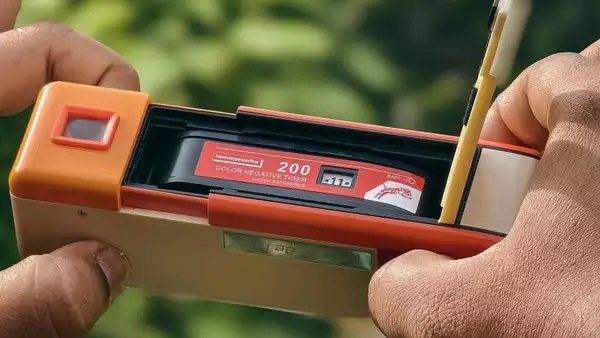
Before we talk about 110 film developing, lets take. a quick look back. 110 film was HUGE in the 80’s and 90’s. As digital came on the scene 110 film was one of the first formats that disappeared. 110 film lovers hung on for years using expired 110 film and the occasional release of hand-made batches in the hopes that someone would bring 110 film back. Now it’s 2025 and we can definitely say that 110 film is back! Lomography began manufacturing and selling 110 film several years ago and its popularity has steadily increased year after year. 110 film is affordable and its smaller form factor makes it a fun film to use on a daily basis. However, finding a place to develop 110 film can be a challenge. In this guide, we'll explore the best places to get your 110 film developed, ensuring your cherished moments are beautifully preserved.
Why Develop 110 Film?
Developing 110 film can be a nostalgic journey, offering a distinct look that digital cameras can't replicate. They smaller frame size creates an image with more grain and the direct flash that is often used with 110 film gives it a look similar to a disposable camera but uniquely its own. Its so much fun to shoot and more affordable and more convenient than 35mm film.
Whether you’re shooting an old stash of undeveloped film or are experimenting with vintage photography, developing 110 film allows you to relive memories or create new ones with a retro touch. But you don’t want to let that 110 film sit around as it decays just like 35mm film and it doesn’t take long for your images to completely disappear. Also, 110 film comes with a paper wrapping which can bleed into and damage the emulsion. Having worked in a photo lab for many years now, I can tell you that much of the damage to 110 film results from the inks on the backing paper bleeding onto the film. So don’t let your film sit around too long before you get it developed.
Where to Get 110 Film Developed
1. Local Photo Labs
Local photo labs can be a great option for developing 110 film. Many independent photo labs, particularly those with a focus on film photography, offer 110 film development services. Here are some tips for finding a local lab:
Check Online Directories: Use online directories or Google Maps to search for photo labs in your area. Look for reviews and ratings to gauge their service quality.
Visit Camera Stores: Many camera stores either provide film development services or can recommend local labs that do.
Community Recommendations: Ask in local photography groups or online forums for recommendations on where to develop 110 film.
If you’re in the North East Texas Area - you can stop by and see us at Shutter Junkies! We develop new and old 110 Film from all manufacturers and scan the negatives at high resolution giving you the highest quality image possible. While many labs are moving away from developing it, we love it, we shoot a lot of 110 ourselves and are dedicated to helping to support and keep the format alive any way we can.
2. Mail-In Services
Mail-in services are a convenient option if you don't have a local lab nearby. Several companies specialize in film development by mail, offering easy-to-use services where you send in your film and receive your developed photos by mail. Some popular mail-in services include:
Shutter Junkies Photo Lab: A small lab that specializes in 110 film, Disposable Cameras, and developing old film. 110 Film processing is only $12 per roll and includes advanced scans with the option to purchase prints.
The Darkroom: A trusted name in film development, The Darkroom offers 110 film processing with high-quality scans and prints. Get your 110 film developed for $19, which includes basic small scans. You have the option to increase the scan size and order prints.
Old School Photo Lab: Known for its expertise in vintage film formats, Old School Photo Lab provides 110 film development with a range of scanning and printing options. Old School Photo Lab Develops 110 film for $17, which doesn’t include scans. Get your 110 film scanned for an addition $10 (making it $27 for each roll).
Dwayne's Photo: With decades of experience, Dwayne's Photo offers reliable mail-in services for 110 film, ensuring your photos are handled with care. 110 developing starts at $10 per roll but doesn’t include scanning. Add scanning for an addition $5.
3. Retail Chains
Most retail chains no longer develop 110 film. After the film apocalypse occurred in the early 2000’s and 110 film began to become a more niche film format, many labs simply sold or stopped maintaining the equipment to develop and scan 110 film. Big retail chains like CVS, Walgreens, and Walmart began to only focus on developing 35mm film and dropped their support for 110 film. Retail chains might still have the ability to develop 110 film, but most can no longer scan 110 film. Many of our customers have sent us 110 film that were developed by CVS or Walgreens or Walmart but that were never scanned because they lack the ability.
But if a big retail chain is the most convenient for you, then check in store and see what their current capabilities are in regards to 110 film. Be sure to ask if they are to both develop and scan the film before you turn your rolls over to them.
4. Develop Your Own 110 Film
While many labs no longer support 110 film, it is possible to develop and scan your own 110 film. There is quite a bit of special equipment you would need as well as chemistry and the learning curve can be quite steep, but developing your own 110 film could save you a lot of money in the long run if you’re shooting a lot of it. There are many resources out there for developing your own 110 film. Check out this article by Bob Janes to get an idea of what all is required to develop your own 110 film!
Tips for a Successful 110 Film Developing Experience
Check Compatibility: Before sending your film, ensure the lab or service you choose can process 110 film specifically.
Inquire About Turnaround Time: Ask about the expected turnaround time for developing and returning your film, especially if you need the photos by a certain date.
Understand Costs: Compare prices for development, scanning, and printing services. Some labs offer package deals that can save you money.
Careful Packaging: When using mail-in services, package your film securely to prevent damage during shipping.
Conclusion
Developing 110 film can be a rewarding experience, allowing you to rediscover old memories or create new ones with a vintage flair. Whether you choose a local photo lab, a mail-in service, or a retail chain, plenty of options are available to get your 110 film developed. By following the tips and recommendations in this guide, you'll be well on your way to enjoying your 110 film photographs. Happy shooting!

Disposable Cameras: Everything You Need to Know (How They Work, Where to Buy & Develop Them)
Disposable cameras are still around and they’re as fun and easy to use as ever!
Disposable Cameras in 2025
Disposable cameras—those classic single-use cameras we all carried around in the 90s—are back in a big way. They’re simple, cheap, and the perfect intro to shooting 35mm film without any technical stress. Just point, click, and let the magic happen. Whether you’re documenting a weekend adventure, a wedding, a road trip, or just diving into film for the first time, disposable cameras make it easy. In this guide, you’ll learn how disposable cameras work, the different types out there, and what happens when it’s time to develop your disposable camera. And when you’re ready, Shutter Junkies Photo Lab handles disposable camera developing quickly, affordably, and with the best scans around.
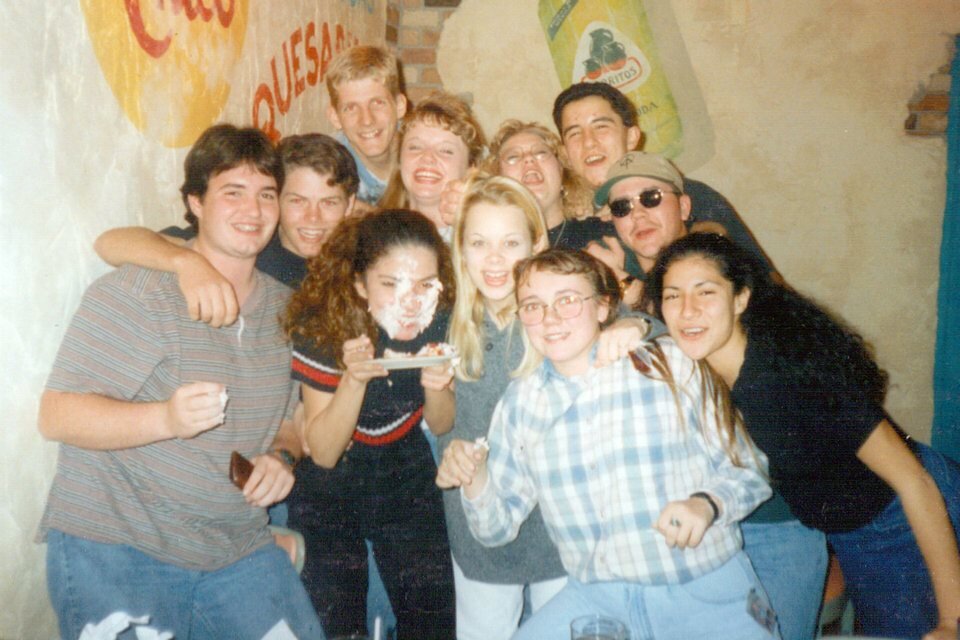
For me personally, disposable cameras have been a big part of my life since I was a kid in the 1980’s. They were something I just took for granted and for whatever reason, like most people, I just stopped buying them. That is until recently. Now I absolutely love using them and we love developing them for our customers at our film lab. If you look closely at the handsome group of young adults in the photo above, you can possibly find me, many years ago when I was 16 and a senior at Boles High School in Quinlan, TX.
What is a Disposable Camera?
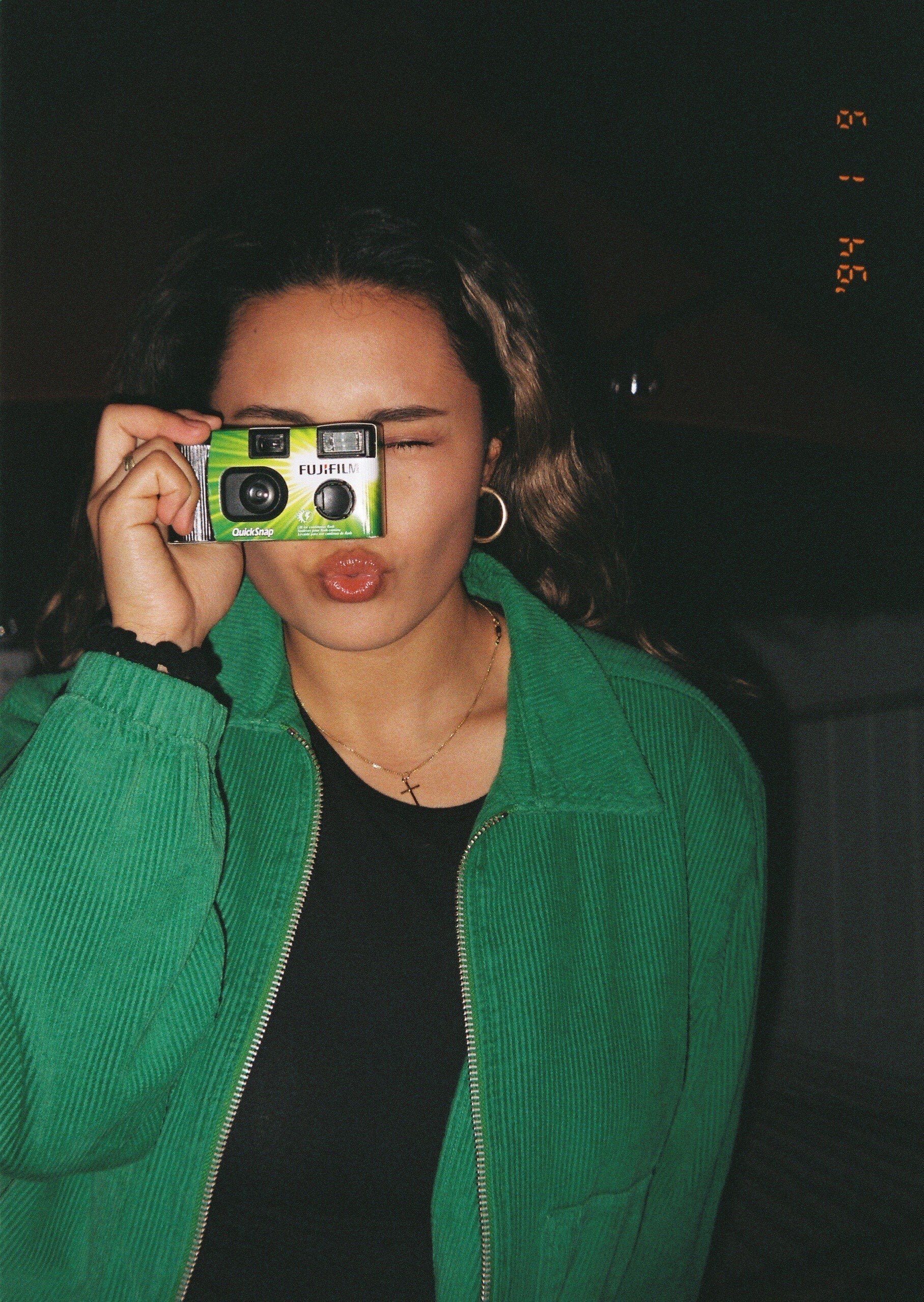
It’s a very simple, very cheap pre-loaded roll of 35mm film loaded into a plastic body with a simple mechanical shutter and film advance and some very basic electronics and a battery. Originally, they were made to simply be dropped off at the local film collection center so you didn’t even have to deal with disposing of the camera and they could be easily recycled. Nothing is adjustable - everything operates in a fixed mode. The lens is fixed and plastic, the aperture is fixed, the shutter speed is also fixed at around 1/100th of a second. The only variable is the film speed. You can usually purchase disposable cameras in ISO 200, 400, and sometimes 800. The flash is usually decently powerful and is normally off. You normally have to press a button to charge the flash before you click the shutter. The recharge button has to be pressed each time so that you can have the flash charged for each shutter click.
These cameras are still made to be taken/sent directly to a film lab for processing, but they can easily be processed at home and if you want to save money on postage when you send your film in, you can open up the camera and send the roll of film in by itself.
Disposable cameras all come loaded with film, there are several different options ranging from basic color to black and white to some crazy film stocks. Disposables come in a lot of different film speeds also, so it gives you a lot of flexibility
Where Can I get a Disposable Camera?
Disposable cameras are available at a lot of places! They are sold in-store at CVS, Walgreens, Walmart, and Target. Mostly these stores either carry a Fujifilm or Kodak disposable in a single pack, a multipack, and a waterproof model.
You can also pick them up online from Amazon and several other retailers. Amazon and other online retailers have a much better selection!
| Store | Description | Price |
|---|---|---|
|
|
||
| CVS | Fujifilm QuickSnap Flash 400 Camera | $14.99 |
| CVS | Fujifilm QuickSnap Flash 400 Camera, 2 Pack | $25.99 |
| CVS | FujiFilm QuickSnap Waterproof Camera | $23.99 |
| Walgreens | Kodak HD Power Flash Single Use Camera | $19.99 |
| Walmart | Fujifilm QuickSnap Flash 400 Camera | $14.96 |
| Walmart | Fujifilm QuickSnap Flash 400 Camera, 2 Pack | $24.96 |
| Walmart | FujiFilm QuickSnap Waterproof Camera | $11.75 |
| Target | Fujifilm QuickSnap Flash 400 Camera | $12.99 |
| Target | Kodak HD Power Flash Single Use Camera | $12.99 |
| Target | Kodak Water Proof Camera | $18.99 |
How Do You Use a Disposable Camera?
Disposable cameras are great because they are so very easy to use. The only thing you need to worry about is buying the right camera/film speed. Because the settings are all locked, there’s no flexibility in exposing the film. While you could maybe use a 800 ISO film in a darker room, an 800 ISO film might not be the best for a bright sunny day. Fortunately, the cameras are all labeled with what lighting environments they are best suited for. All you need to do is make sure you select the right one. Fujifilm Quicksnap disposable cameras come loaded with 400 iso film, which works better in bright daylight conditions. The Kodak brand disposable cameras (Funsaver and PowerFlash) come loaded with 800 ISO film, which works better in darker spaces like indoors.
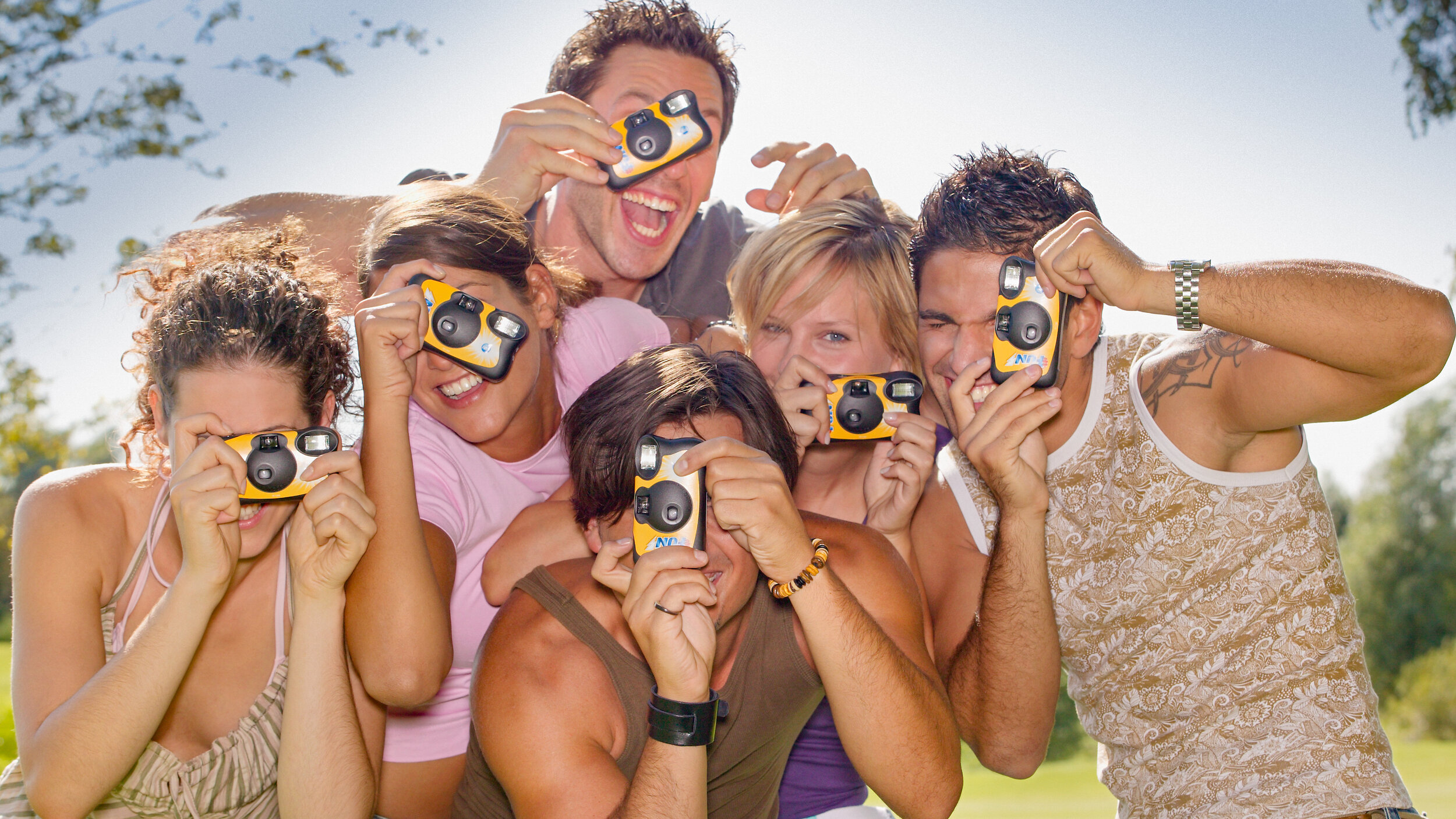

After that, you literally just point and shoot. The focal range is pretty big on these cameras. The biggest thing you need to remember is that the minimal focal distance is going to be your biggest concern. You can’t put the camera right in your face and expect the image to be in focus. Generally, I’ve found that about an arm’s length away is the minimal focal distance for these cameras. If you’re in the shade or a shady area, you should definitely always use the flash. In fact, even if you are out in the sun, use the flash any way as it helps to fill in the harsh shadows on the face. In most situations, you can never have enough light!

It is important to note that when you are taking a photo, looking through the viewfinder only gives you an approximation of the image you are taking. There is no optical view finder or ranger finder, its simply a hole in the top of the camera for you to look through. You need to take parallax into consideration when taking photos of objects close to you as it might change the final composition of the actual image.
Where Can I Get My Disposable Camera Developed?
There are still quite a few places out there that process film. Unfortunately, most of them are not local for the majority of us. I created a blog post talking about your options for getting your disposable cameras developed. Check out that blog post HERE! There’s a lot of great information there that will also help you with disposable cameras. Walmart, Walgreen, and CVS still process film, but you won’t receive your negatives back. Even if you’re new to film, one thing you need to know is that YOU ALWAYS WANT YOUR NEGATIVES BACK! If a service doesn’t return your negatives, don’t use them. If you have your negatives, you can reproduce the image as many times as you want. The digital scans are no replacement or substitute for the film negatives.
We also offer disposable camera processing! Unlike some of our competitors, we handle your images ourselves and we always return your negatives. Click HERE to get your order started! You can also send it off to a number of really great labs out there. Richard Photo Lab is great as well as The Darkroom. Almost all labs will give you scanning options as well as prints and other options. If you’re mailing your film in, you. might want to remove it from the camera so save on postage. If the lab you are sending your film to offers a pre-paid label, I would just send the whole thing in. Most labs have places to recycle the cameras and batteries and it beats throwing all of that away yourself.
How to Get Disposable Camera Pictures on Your Phone
Almost every lab the processes your negatives will offer scanning services. At our photo lab, you can have your images scanned and they go to a gallery where you can download them onto any device, including your phone. Almost every lab offers this same service, but some still send you CD’s or USB sticks. Check with your lab before placing your order. I usually opt for higher resolution scans so that when I download them to my phone or tablet, I like getting an image that’s decent enough quality that it could be printed and edited a bit. You can also purchase a film scanner yourself and scan your negatives. It is a little more work but it gives you a little more control over the scans and the final product.
Simple Use Vs. Single Use Cameras
There are two other types of cameras out there on the market which fall into the disposable camera family, in my opinion. Recently, Lomography.com released a new line of cameras call Simple Use Cameras which shared the design and simplicity of a disposable camera, but were made to be reloadable. Disposable cameras have to be essentially broken to get the film out and while you can reload and tape up the camera and use it again, it’s pretty much trashed. Lomography’s Simple Use Cameras come pre-loaded with film and are easily reloaded and reusable. The price for these cameras is significantly higher than traditional disposables, but you have to take the reusability into consideration when looking at the price.
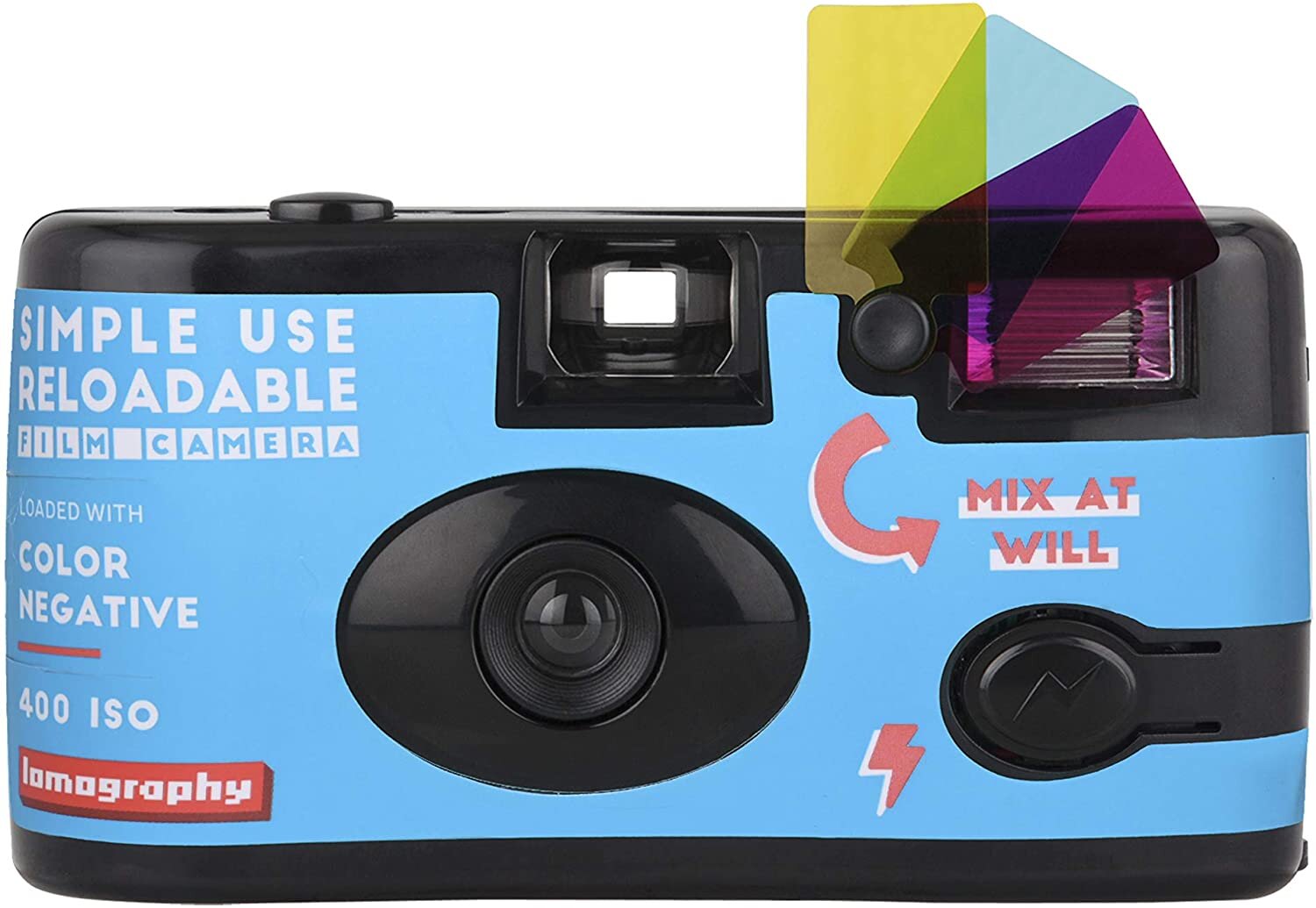
Single-use cameras are merely a rebranding of disposable cameras. With sustainability and conservation being very popular some companies decided to move away from the disposable moniker because of negative connotations associated with the word disposable. Single-use cameras are no different than normal disposable cameras.
Best Disposable Cameras Today
Kodak FunSaver
The Kodak Funsaver is one of the most popular disposable cameras out there today. This is one of the most popular cameras we see being used today and we develop hundreds of them each week. The shape of this camera is a little bigger and bulkier than most, having curves that fit nicely in your hand but making it a little difficult to fit this disposable cameras in your pocket. The camera comes loaded with Kodak 800 ISO film which works great in the daylight and indoors with the flash. The biggest issue with this camera is when you are shooting in extremely bright situations like sunlight snow or a bright sunny day at the beach. In those cases, these cameras tend to overexpose a stop or two. But indoors and at night the Kodak Funsaver excels rendering much more information in the darker areas than its competitors. This camera has a plastic body, a plastic 30mm lens locked in at F10 and the shutter is set at 1/100th of a second. The effective flash range is from 4.5 feet to about 12 feet. Any closer than that and everything over exposes and anything further and it will be severely underexposed. The camera’s flash button has to be held and the flash recharged each time you want to use it. You can hear the capacitor whistling as it charges up and a red light on top of the camera illuminates more brightly as it charges up. This is an effective way to make sure the flash is fully charged each time you take a picture but many of our customers forget in the moment to hold down that button to charge the flash and underexpose the image completely, losing the moment forever. Our favorite part about these cameras is that they are easily reusable (though they aren’t really advertised to be) and easier to recycle than other throw away cameras.
Fujifilm Quicksnap
The Fuji Quicksnap Disposable camera is another very popular disposable camera. Its availability at most Walmart locations makes it a popular choice amongst many casual photographers. The Quicksnap has a much smaller form factor than the Kodak Funsaver and easily fits in your pocket or purse or backpack. But its smaller size has no effect on the quality of the images you get. Unlike the Kodak disposable cameras, the Fuj Quicksnap comes loaded with 400 ISO film, one stop lower than the 800 ISO film in Kodaks. This slower film speed gives you better results in bright daylight condition and really good results in all other conditions. The effective flash range is about 4.5 feet to 12 feet and this features a “stay-on” flash switch rather than a flash button. Slide the flash button on and the flash will continually recharge while you use it. The only downside to this is that sometimes the flash doesn’t fully recharge if you’re taking pictures quickly. While the Kodak Funsaver struggles in bright light, the Fuji Quicksnap struggles in darker spaces, indoors and at night. As long as your subjects remain inside the effective flash range, your images will still turn out great, but outside of the range everything is going to be underexposed and just black. The Quicksnap has a 32mm plastic lens and an aperture that is set at f10 while the shutter is set to 1/140th of a second.
Kodak Powerflash
The Kodak Powerflash disposable camera is very similar to the Kodak Funsaver in almost every way, except its form factor. It has a slimmer, more compact body and fits nicely in your pocket. It’s not as small as the Fuji Quicksnap, but it has a much more practical shape. While this camera is identical to the Funsaver, featuring 800 ISO film, a 33mm plastic lens set to f10 and 1/100th of a second for the shutter, this camera is not as popular as the Funsaver or the Quicksand. But this camera is actually our favorite disposable camera as the results we see coming from this camera are slightly better than both the Funsaver and the Quicksnap. We couldn’t find any specs on the flashes power, but we assume by the brand name of the camera that the flash is slightly more powerful and in dark situations like indoor events, night time photos, and even weddings and wedding receptions this disposable really excels. If you’re shopping for a disposable camera for your wedding, prom, bachelorette party, birthday party, or any other indoor disposable camera photography, this is the camera we recommend. But like the Funsaver, this camera features a hold-to-charge flash button and users are prone to forget or undercharge the flash leading to underexposed images.
Ilford HP5 Disposable (Black and White)
The Ilford HP5 Disposable Camera is a fantastic option for anyone who loves classic black-and-white film. Loaded with Ilford’s legendary HP5 400 film, this single-use camera delivers that gritty, contrast-rich look that street photographers and portrait shooters swear by. It handles a wide range of lighting conditions thanks to its versatile ISO 400 speed, and the built-in flash makes indoor shooting easy. If you want the timeless aesthetic of traditional B&W photography without the hassle of loading a camera, the Ilford HP5 Disposable is a simple, reliable choice. And yes—Shutter Junkies develops Ilford HP5 disposable cameras with beautiful scans and fast turnaround.
Lomography Simple Use
The Lomography Simple-Use cameras take the disposable camera idea and give it a creative twist. Unlike traditional single-use cameras, these come in several fun variations, each preloaded with a different film stock to match your shooting style. You can choose the Color Negative 400 version for vibrant, punchy colors; the LomoChrome Purpleedition for surreal, dreamlike purple-shifted tones; or the LomoChrome Metropolis version for a gritty, desaturated, urban look. There’s even a Black & White 400 option for classic monochrome images. Each Simple-Use camera includes color gel filters over the flash, letting you add funky effects right in-camera. They’re perfect for experimenting with film without committing to a full camera setup—and yes, Shutter Junkies develops every Lomo Simple-Use variation with high-quality scans and fast service.
Harman Reusable
The Harman Reusable Camera is a great step up for anyone who loves the convenience of a disposable camera but wants something they can keep using roll after roll. Made by Harman Technology—the same company behind Ilford film—it’s a simple 35mm point-and-shoot that comes bundled with two rolls of Kentmere 400 film, making it an affordable entry point into reusable film cameras. The Harman Reusable features a fixed-focus lens, built-in flash, and lightweight plastic body, giving it that classic disposable-camera feel with none of the waste. It’s perfect for beginners, casual shooters, or anyone wanting an inexpensive camera to toss in a bag and take everywhere. And as always, Shutter Junkies develops all Harman/Kentmere films with fast turnaround and crisp, high-quality scans.
Disposable Cameras are So Much Fun!
I have a large number of cameras, both film and digital, that I can shoot with. But I still love using these disposable cameras! They’re just fun and almost stress-free! And I love the look of the images they produce! These are great to give to the kids to take on trips but they're also great to grab and have some fun with friends. We take a disposable with us anytime we take our 6 kids out or head to family event or a birthday party. Our kids absolutely love using them. The tactile feel of the film winder, and click and the flash, they can’t get enough when we let them take pictures.
As a camera, they are way less intimidating than a mirrorless or an SLR, or even a cell phone. Anyone can pick one up and start shooting and that’s the magic of these cameras and why they have never gone away in spite of the roller coaster that film has gone through.
Jump on Amazon and check out what’s available or run down to your local Walmart and pick one up and have some fun! You won’t regret it, I promise!

The Canon EOS 1N
If you’re considering picking up a Canon EOS 1N - this is a great camera to work with!
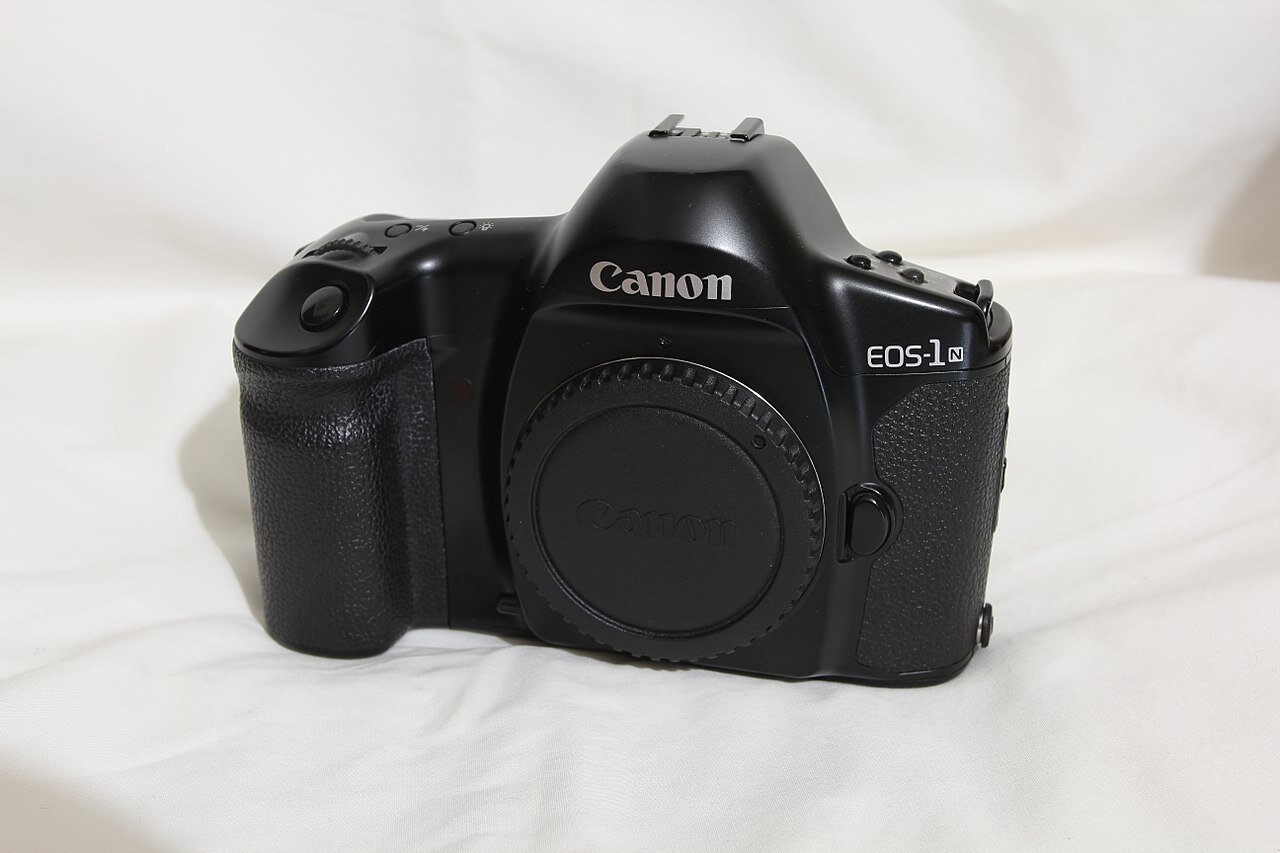
The Canon EOS 1N
I own quite a few film canon film cameras. I enjoy using all of them from time to time, but the Canon 35mm film camera that I used the most is the EOS 1N. The familiar layout combined with the fact it uses all of the lenses I already own make it the camera I reach for first whenever I go out. If you’re considering getting into film or stepping up from an older Canon AE-1, then this is definitely the camera for you!
Canon EOS 1N Questions
If you’re considering a 1N, then you might have some questions. I’m going to start with a few common questions to hopefully help you find the information you’re looking for.
What kind of film does the Canon EOS 1N use?
The 1N is a 35mm film camera and can use ALL 35mm films in a standard film cartridge. Color, black and white, and specialty stocks all work great with this camera. Certain films might not have the ISO data encoded into the film and therefore you might have to set the ISO manually, but the film will still work fine in the camera.
What kind of lenses does the Canon EOS 1N use?
The 1N uses Canon’s very popular EF-mount. EF lenses are still in production and there is an abundance of used lenses out there on the market. Beside the option to buy new or used lenses, EF lenses from Canon also come in a broad range of focal lengths, prime and telephoto, as well as a broad range of glass quality from some very basic beginner lenses all the way up to their L-series glass which boasts some of the most beautiful optics in photography.
What kind of batteries does the Canon EOS 1N use?
The Canon EOS 1N body uses a 2CR5 battery. These batteries are available locally at battery and electronics stores and also available on Amazon. I’ve used the Panasonic 2CR5 as well as the Energizer 2CR5 and have had good results from both.
If you get a 1N with the optional BP-E1 battery pack then you could simply load AA batteries. These battery packs are no longer produced but if you can pick up a used one its a simple addition to your Canon 1N SLR.
Can I use a flash with the Canon EOS 1N?
Yes! All of the Canon branded flashes work great with the 1N. There are also several non-Canon flashes that work great with the camera and are much more affordable. You can pick up an older used flash or buy a brand-new one. The 1N utilizes TTL to help you get a better result while using a flash. I personally recommend the Canon Speedlight 600EX II-RT. It’s a little bit pricey, but the features and build quality make it totally worth the price!
Does the Canon EOS 1N have autofocus?
Yes! It features a 5-zone autofocus utilizing TTL phase detections. The focus zones consist of a series of five little boxes that are placed across the middle of the image. You select with zone you want to use and then place and half-press to focus. The autofocus is a little slow compared to more modern cameras, but it is accurate.
How much does the Canon 1N cost?
You can expect to pay between $100 to $350 for a used Canon 1N according to my research looking at Ebay, Facebook Marketplace, and a few used camera dealers. The condition of the camera affects the pricing the most.
Canon EOS 1N Review
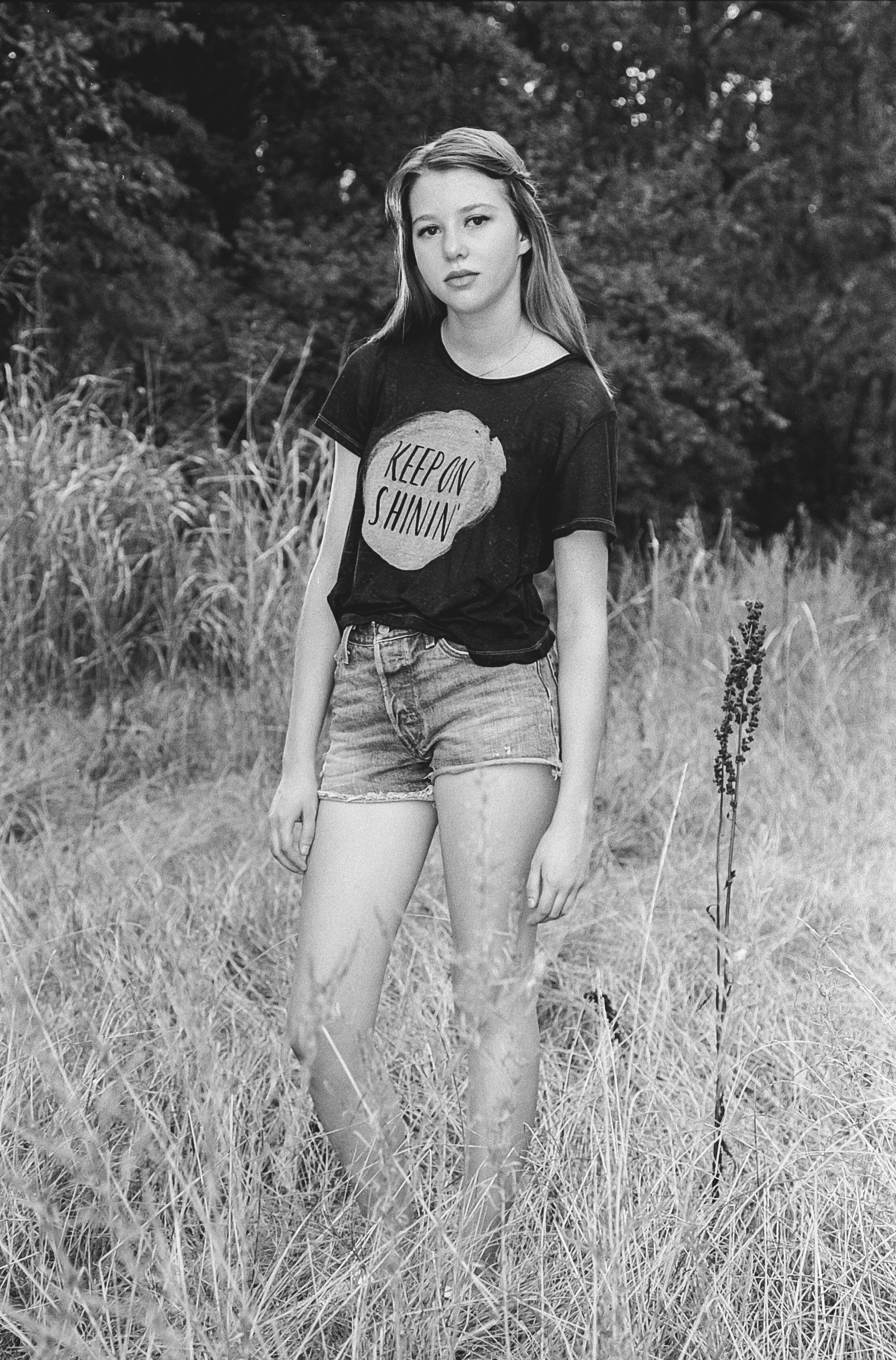
I bought this camera as a compromise. I actually wanted a Canon EOS 1V, but the prices of the 1V were outside of my budget. I spent quite a bit of time looking at used camera sites and Ebay before I finally found a camera that was in good shape at a decent price. While I generally do love the camera, it does have a few issues. Here’s a breakdown of the pros and cons of the Canon EOS 1N:
Pros
Familiar form factor with other Canon SLR/DSLR bodies
Popular lens-mount (Canon EF)
Availability of both new and used lenses
Modern features like autofocus and TTL flash
Auto-winding film
Rugged design
Cons
Batteries are a little inconvenient to find sometimes
Battery has some connectivity issues (I have had to recently insert a piece of tape to keep the battery pressed against the contacts)
There’s a common issues with the shutter becoming stuck and not cycling, but is easy to fix (has only happened to me once when I first got the camera)
Focus is limited to only 5 zones and is a little slow (great for portraits, not so great for events…)
Should You Buy the Canon EOS 1N?

Absolutely! If you’ve already invested in the Canon eco-system, you can pick up a body and use all of your existing accessories, which is a huge win. If you’re just getting started but know you want to live in the Canon eco-system then anything you buy will work on all of the existing Canon equipment (with the exception of the newest mirrorless devices that use the new RF lenses). Also, if you’re interested in getting into film but don’t want to go the fully manual route that many of the older 35mm SLRs require you to take, then the 1N is a great camera at a great price-point that offers enough modern features to get you started. Just rotate the mode selection into P for Program and shoot away and you’ll get great results almost every time!
There are a lot of great features and specific settings that can help you get a lot out of the 1N - but honestly, I don’t use most of them. I mainly use mine for shooting 35mm film at weddings and special events when I need the speed of autofocus and the ability to use the lenses I already have with me. When I get an opportunity, I will also be picking up and Canon EOS 1V and will more than likely retire this camera. But its still a great workhorse and is dependable in spite of its age!

If you need more information, make sure and download the user manual below! It’s got everything you need to know about using the camera on a daily basis!
Check our Online Store for the Canon 1N
We occasionally carry these in our online store! Click here to see if we have any in stock!
Recommend Films to use with the Canon EOS 1N
If you’re a beginner, here’s some links to some great film to get you started with your Canon 1N.